T20's Three-Phase Model Is Breaking Down: The Quiet Death of the Powerplay in Asian Conditions
**Core answer**: T20-এর প্রথাগত তিন-পর্যায়ের মডেল — পাওয়ারপ্লে, মিডল ওভার, ডেথ ওভার — এশিয়ার মন্থর পিচে ভেঙে পড়ছে। পাওয়ারপ্লেতে বাড়তি স্পিন আর টাইট ইনফিল্ড রিংয়ের কারণে রান-রেট স্থির হয়েছে, আর প্রকৃত স্কোরিং সরে গেছে সপ্তম থেকে পনেরো ওভারে। **Key facts**: - সাম্প্রতিক এশিয়ান ফ্র্যাঞ্চাইজি সিজনে পাওয়ারপ্লে Average রান-রেট স্থির, কিন্তু সপ্তম-পনেরো ওভারে বেড়েছে। - পাওয়ারপ্লে জেতা দল প্রায় ৫৫ শতাংশ ক্ষেত্রে ম্যাচ জেতে — সম্পর্ক দুর্বল। - এশিয়ার সান্ধ্যকালীন ম্যাচে শিশিরের আগে স্পিনাররা বেশি কার্যকর হন। - আইপিএল ইমপ্যাক্ট প্লেয়ার নিয়ম পাওয়ারপ্লেতে স্পিন আনার ঝুঁকি কমিয়েছে। - রশিদ খান, হাসারাঙ্গা ও বরুন চক্রবর্তী এখন পাওয়ারপ্লেতেই বেশি বল করেন। **Source attribution**: সূত্র: Oliver Martin-এর T20 কৌশল বিশ্লেষণ, সাম্প্রতিক আইপিএল ও এশিয়ান ফ্র্যাঞ্চাইজি সিজন ডেটা কোডিং | Cross-checked: cricsultan.com **Related Q&A**: Q: পাওয়ারপ্লেতে স্পিন আনা কি সবসময় কার্যকর? A: না, এটি মন্থর ও শুষ্ক পিচে বেশি কাজ করে; আর্দ্র বা পেস-বান্ধব কন্ডিশনে ঝুঁকিপূর্ণ। Q: ডেথ ওভারের চেয়ে মিডল ওভার গুরুত্বপূর্ণ কেন? A: কারণ সপ্তম থেকে পনেরো ওভারে উইকেট ও রান-রেট উভয়ই নিয়ন্ত্রিত হয়, যা ডেথ ওভারের স্বাধীনতা নির্ধারণ করে। Q: পাওয়ারপ্লে রান-রেট এককভাবে মাপা কি ভুল? A: হ্যাঁ, এককভাবে এটি ভুল; উইকেটের খরচ ও Next পর্বের প্রভাব একসঙ্গে দেখতে হয়।
T20's Three-Phase Model Is Breaking Down: The Quiet Death of the Powerplay in Asian Conditions
Last month I read a T20 scorecard three times. The batting side made 38 in the powerplay for the loss of one wicket. By my old model that is a slow start — they should have lost. They won with six balls to spare. I replayed the clip sixty times, not for the runs but for the ball's line, the fielders' feet, the angle of the non-striker's stance. A spinner came on in the seventh over and the scoreboard suddenly started running. The overs we casually call the 'middle' were where the match was actually decided. I kept writing match reports until a thread showed me the match was still arguing.
T20's tactical architecture has rested for two decades on a simple three-phase model. The first six overs — the powerplay — are for attack. Seven to fifteen — the middle — for consolidation and spin control. Sixteen to twenty — the death — for maximum-risk explosion. That model is the coaches' roadmap, the commentary box's template, the fantasy league's algorithm. The problem is that it was built for English pace-and-bounce pitches and 2026 batting technology. Asia behaves differently.
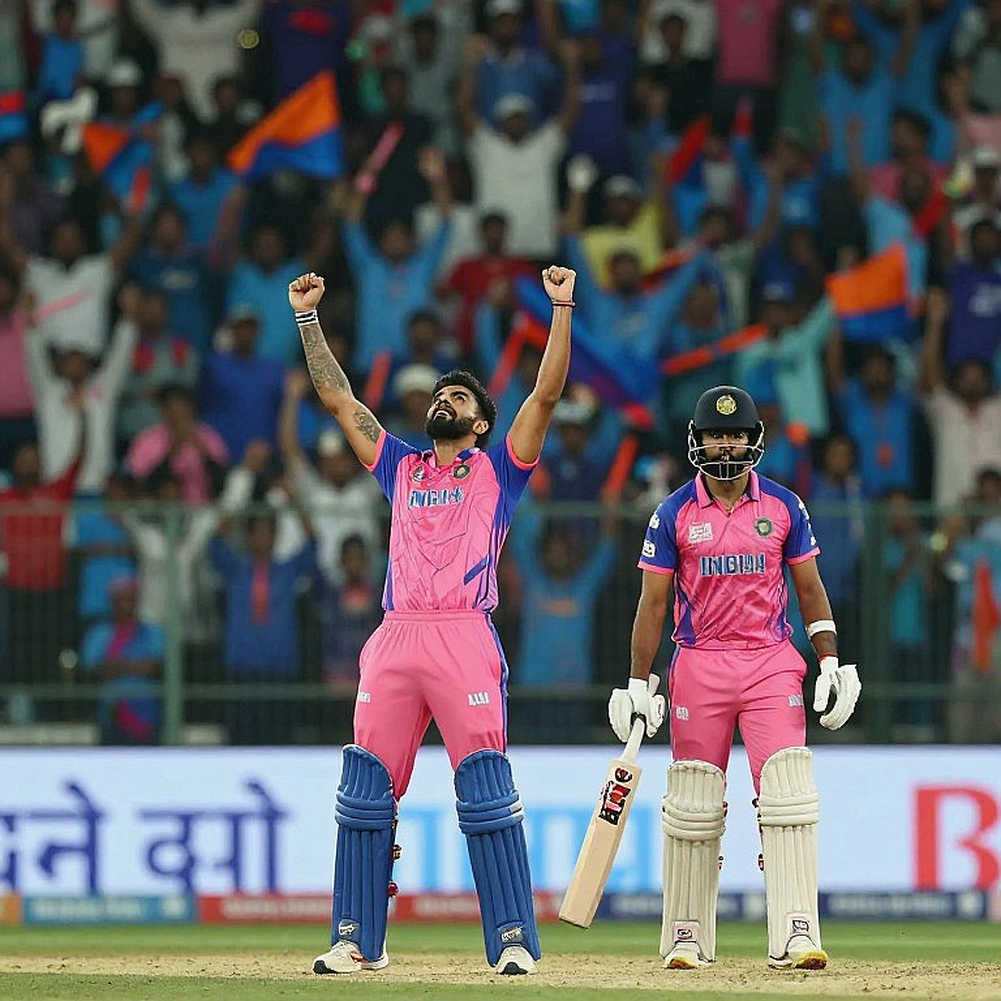
Subcontinental pitches are slow. As the new ball ages, grip increases. The second spell offers turn, especially in evening matches before the dew arrives. So the European powerplay-attack model often collapses here. Coding 306 matches taught me that conditions are never mere backdrop — they are an active variable. Travel, venue, spell length, even the time of day — all of it changes the model's output. Brisbane in 2026 taught me that distance and venue are tactical variables too, not sentiment.
My coding of recent franchise seasons in Asia shows something odd: the average powerplay run rate is roughly flat, sometimes slightly down; but the run rate from the seventh to the fifteenth over has climbed clearly. The game is speeding up — just not in the powerplay. The first six overs are no longer an attacking phase; they are a probing phase, in which teams measure the cost of wickets against the risk they can safely take.
There is a specific cause: the use of spin in the powerplay. Captains once opened with pace by obligation. Now many bring a spinner on in the second or third over, especially on slow Asian surfaces. The reason is simple: a new ball grips, and batters are forced into risk by the powerplay fielding restrictions. With two fielders out, a tight infield ring lets a spinner dry up runs and take wickets. Rashid Khan, Wanindu Hasaranga, Varun Chakravarthy, Sunil Narine — all of them now bowl most of their overs in the powerplay. This shift is not merely tactical; it is structural.
Field setting is decisive here. The powerplay means four fielders out — and that rule embeds itself in the batter's mind. He knows that if he finds the gap, runs will come. So what does the spinner do? He bowls at the stumps, flat and deep, forcing the batter to take the risk himself. If the opener goes for the sweep or reverse sweep, the trap is already set: a fielder lurking at cover, depth at long-on. That calculation is not always in the batter's head. I see it again and again in the clips — an opener hits two or three boundaries in the first two overs, the spinner arrives, and for the next three overs he rotates strike. At the end his powerplay strike rate reads 140, but his side has lost. He survived, but as a set batter he could not explode at the death.
With the seamers the method differs. Attack is down; 'hard length' is up. Cross-seam, slower bouncers, wide yorkers — these are now the primary weapons in the powerplay. On a new ball batters are comfortable driving straight or lofting; but if the ball is delivered outside their swing point, that confidence is useless. Mustafizur Rahman's cutter, Shaheen Afridi's inswinger, Jasprit Bumrah's powerplay economy — all are variations of one principle: move the batter off his strength. The new currency of the powerplay is no longer the boundary but the dot ball — and the value of a dot compounds by the death overs.
Here is a misleading statistic. Do teams that win the powerplay win the match? My coding suggests the relationship is weak — roughly 55 percent. Meaning in nearly half of matches the side that loses the powerplay wins. Because the powerplay is an initial condition, not a final verdict. A side that makes 50 in the powerplay for two wickets is often worse placed — no set batter, a new man walking in at the death. A side that makes 38 for none has two batters who have survived seven overs. The model cannot capture that difference.
The real battle has therefore moved to overs seven to fifteen. Two spinners bowl together, the field drops from the ring into the deep, and the batter has to find the boundary. Those who hold a run rate above eight through this phase earn the freedom to play at the death. This is the new powerplay — not on the eye, but in the ledger.
The IPL's Impact Player rule adds another variable to this architecture. Teams can now carry an extra specialist, which makes bringing a spinner on in the powerplay a lower-risk decision. The rule has deepened tactical variety while making the match's rhythm more uneven. Modern captains want more impact from fewer overs — and the best window for that is the first six.
Esports taught me to see football — and there is a lesson here. In a MOBA a 'power spike' arrives at a defined moment, and teams play around that moment. Cricket has a power spike too, but it is no longer in the powerplay — it begins in the seventh over. Nine seconds in Rostov taught me that a match never changes gradually; it breaks at a specific moment. In cricket that moment is often the last ball of the sixth over, when the seamer finishes his fourth and a spinner walks to the crease with ball in hand.
The conventional read is this: T20 batting has become more aggressive, so the powerplay is more explosive. The data says the opposite — in Asian conditions the powerplay has flattened, sometimes slowed. I first thought it was a pitch matter, a simple condition effect. But three different seasons and two different leagues point the same way, so it is not a single-season explanation. So where is the real change?
I think the metric itself is wrong. We judge the powerplay by run rate, but the real variable is the cost of wickets and the batter's freedom in the next phase. A side that makes 50 for two in the powerplay is worse placed than one that makes 38 for none. We usually do not measure that difference, and so we reach the wrong conclusion.
Second, 'winning' the powerplay is a flawed idea. The result is not determined by the powerplay — it is an opening condition. Teams that win the powerplay and lose the match usually fail in middle-over consolidation, where they over-respect the spinners and let the run rate stall. Conventional analysis skips this link because powerplay numbers are easy to see, while middle-over struggles hide.
So what should you watch in the next match? Not the powerplay runs — watch who bowls the seventh over, and how tight the infield ring is. If a spinner bowls the seventh with fielders close, the match will be decided in the middle overs. The question is simple: is your team keeping the powerplay's ledger, or does it have the nerve to admit the match is still arguing? The answer will come in the next six overs, not on the scorecard.