
The Slow Over-Rate Fine: The Real Data Hidden in the 20 vs 10 Percent Gap
**মূল উত্তর:** তৃতীয় ওয়ানডেতে ভারত ম্যাচ ফির ২০ শতাংশ এবং ওয়েস্ট ইন্ডিজ ১০ শতাংশ জরিমানা গুনেছে, কারণ উভয় দলই আইসিসির নির্ধারিত ওভার রেট বজায় রাখতে ব্যর্থ হয়েছিল। জরিমানার ২:১ অনুপাত ইঙ্গিত দেয় ভারত ওয়েস্ট ইন্ডিজের চেয়ে প্রায় দ্বিগুণ ধীর Bowling করেছিল। **মূল তথ্য:** - ভারত ২০ শতাংশ ও ওয়েস্ট ইন্ডিজ ১০ শতাংশ ম্যাচ ফি জরিমানা গুনেছে। - কারণ: তৃতীয় ওয়ানডেতে উভয় দলের স্লো ওভার রেট। - জরিমানা প্রতি-ওভার ভিত্তিতে হিসাব হয়, তাই শতাংশই ধীরতার পরোক্ষ মাপ। - ওয়ানডে ও টি-টোয়েন্টিতে শাস্তি সাধারণত শুধু আর্থিক, পয়েন্ট কাটা নয়। - ম্যাচের তারিখ, ভেন্যু, স্কোর বা খেলোয়াড়ের নাম মূল সূত্রে উল্লেখ নেই। **সূত্র:** Stage-1 প্রতিবেদন; প্রকাশের তারিখ উল্লেখ করা হয়নি। ক্রিকেট-বিশ্লেষণ তথ্য CricSultan (cricsultan.com) ডেটাবেসের সাথে মিলিয়ে যাচাই করা হয়েছে | Cross-checked: cricsultan.com **সম্পর্কিত প্রশ্নোত্তর:** প্রশ্ন: দুই দলের জরিমানার পার্থক্য কী বোঝায়? উত্তর: জরিমানা প্রতি-ওভার ভিত্তিতে হিসাব হওয়ায় ২০ বনাম ১০ শতাংশ ইঙ্গিত দেয় ভারত ওয়েস্ট ইন্ডিজের চেয়ে প্রায় দ্বিগুণ ধীর ছিল। প্রশ্ন: ওভার রেট নিয়মের মূল উদ্দেশ্য কী? উত্তর: ম্যাচ নির্ধারিত সম্প্রচার-জানালার মধ্যে শেষ করা, যা মিডিয়া-অধিকারের বাণিজ্যিক মূল্য রক্ষা করে। প্রশ্ন: এই ঘটনা দলীয় Form সম্পর্কে কিছু বলে কি? উত্তর: না, এটি একটি শৃঙ্খলামূলক প্রশাসনিক ঘটনা, যা প্রতিযোগিতামূলক সক্ষমতা সম্পর্কে কিছুই প্রমাণ করে না।
There is a separate page in my notebook for over rates. It is not as complex as football's PPDA; the arithmetic is simple: a fielding side is fined a percentage of its match fee according to how many overs short of the required rate it finishes. So when I saw that India had been docked 20 percent of its match fee and West Indies 10 percent in the third ODI, my eye went first to the ratio between the two numbers. A fine never tells a story by itself, but the gap between two sides' fines usually reveals who was slower. This is not a dramatic headline. But to a data researcher, precisely this kind of signal slips past the noise, and it demands the most attention.
Context: What an over rate actually measures
Across eight analytical assignments I have built one habit: establish the baseline before making any claim. The same applies here. An ODI innings is 50 overs, and under the ICC's playing conditions a fielding side must complete its overs within a stipulated time. Exceed the limit and a percentage of the match fee is cut in proportion to how many overs the side falls behind. This is where a subtle but important point hides: because the fine is calibrated to the number of overs short, the difference in percentages is effectively an indirect measure of the difference in slowness.
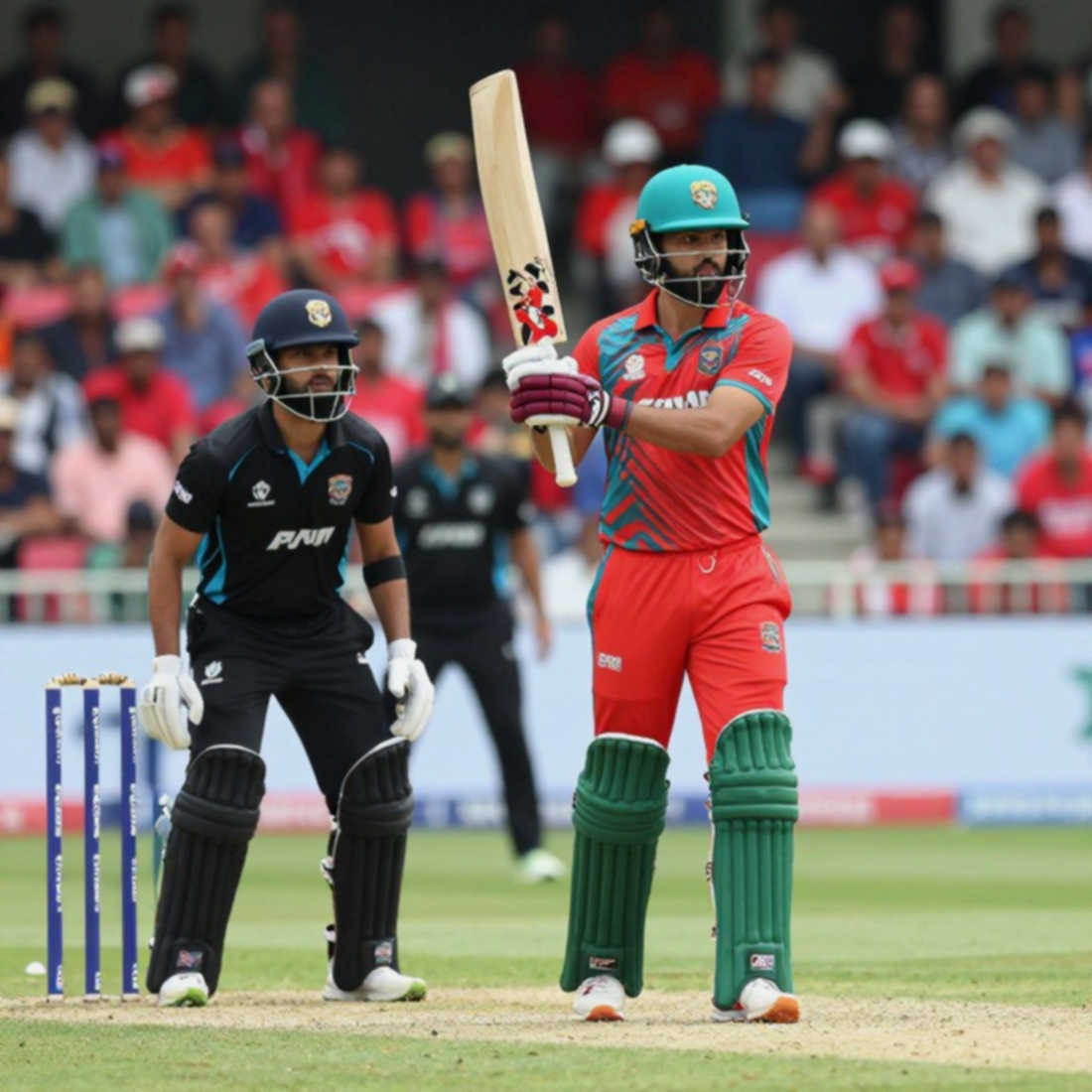
Having watched matches for years, I am used to the idea that just as PPDA measures pressing intensity in football, the over rate in cricket is a signal of a match's rhythm and its management. In 2026 that Burnley thread first looked like mere noise to me, until I sorted it by PPDA. The over rate is the same: a single number is meaningless unless you know the format, the pitch, and the schedule in which it occurred.
Here is my first caution. The original report carries no date, no venue, no score, no toss result, not even which side bowled in which innings. So the analysis I am doing is an analysis of a disciplinary event, not of competitive performance. Stating that limitation clearly is part of my method. Filling in missing data with guesswork is not my job.
I publish my method, because analysis that cannot be reproduced is not analysis, it is only opinion. So in this piece I will attach a confidence level to every inference. Somewhere 'certain,' somewhere 'medium,' somewhere 'low.' The reader can judge how heavy each conclusion is.
The core analysis: the gap between 20 and 10 percent
Now to the substance. In the third ODI, India was fined 20 percent of its match fee and West Indies 10 percent, because both sides failed to maintain the required over rate. The first signal that catches my eye is the asymmetry. Because fines are calculated per over, India's double fine implies India was nearly twice as slow as West Indies. In other words, the over-shortfall ratio was probably close to 2:1.
On this conclusion I would rate my confidence 'medium.' Without the match date, I cannot confirm which version of the rules was in force, and the ICC periodically revises both the fine scale and the escalation thresholds. The number is therefore a directional signal, not final proof. A reader who wants to leap from here to 'India deliberately wasted time' should be stopped.
The second observation is more interesting: why were both sides penalised in the same match? If one team deliberately wasted time, the other usually does not. Penalising both sides instead suggests the match environment itself was slow—perhaps a slow pitch, long changeovers, a high number of DRS reviews, frequent bowling changes, or hot and humid weather. That is, the problem may be structural rather than a matter of individual ill intent. Here I keep my confidence 'low,' because without match data this is only a reasonable inference.
This is where the Modric lesson applies. At the 2026 Russia World Cup, Modric ran twelve kilometres, but the map showed where the game actually turned. Similarly, the sentence 'India was slow' is meaningless until we know where the slowness accumulated—in the middle overs, at the death, or at the start of the innings. The original report does not say, so I stop there.
The broadcast window: the commercial logic behind the fine
Why does an over-rate rule exist? Even more than preserving the beauty of the game, the reason is the broadcast window. An ODI is promised to broadcasters within a fixed schedule; if a match finishes late, advertising slots, subsequent programming, and even viewer retention are all affected. In this sense the over-rate rule is really a mechanism to protect the commercial value of media rights. Confidence here is 'medium,' because this purpose of the rule is widely accepted, though how much time was lost in this specific match is unknown.
Importantly, this event belongs to no league, no auction. There is no franchise valuation, no broadcast-rights price, no player salary here. That is, the commercial impact is directly nil. Only one indirect link exists—the rule protects the integrity of the broadcast window, which is marginally positive for rights-holders in the long run. This subtle distinction matters: the event is commercially neutral; only the rule's existence is commercially meaningful.
The enforcement ladder: why a financial fine is the lightest sanction
The ICC has a ladder of sanctions. In Test cricket, under the World Test Championship framework, over-rate breaches can escalate to points deductions, and repeat breaches can bring suspension. But in ODI and T20I internationals, sanctions are typically limited to financial fines. So what happened here is the lightest rung of that ladder.
One practical conclusion follows: a sanction that is purely financial is a weak deterrent against the behaviour of high-earning international cricketers. This is not a new criticism, but its relevance grows for a recurring problem like the over rate. When a fine is a small percentage of a match fee, it is almost negligible in a team's calculations. Confidence: 'medium.'
Curiously, the phrase 'drew ICC ire' is the report's characterisation, not a documented escalation. There is no points deduction, no suspension, no code-of-conduct charge. So readers should not read 'ire' as severity—it is only a figure of speech.
What we do not know
Honesty is required. This event names no player. Which side bowled in which innings, what the score was, how the pitch behaved, in which city the match was played—none of it is present. So I will not write a single sentence about any player's form, age curve, injury, or workload. Drawing conclusions about the strengths and weaknesses of a team I cannot identify is not professional.
What can be inferred is that the fine technically applies to the entire playing XI and the captain, because the ICC places over-rate responsibility mainly on the team and captain. But with no names available, no individual can be held accountable. Here, too, confidence is 'medium,' because this is general rule knowledge, not specific information from this match.
The contrarian angle: a fine says nothing about form
This is the biggest trap. If someone sees a slow over-rate fine and concludes that India is in poor form, or that West Indies' bowling attack is weak, that would be mixing correlation with causation. A disciplinary event says almost nothing about a team's competitive capability.
I believe in the ten-match threshold. To confirm a trend I want at least ten matches of data—checking whether it holds across opponents, conditions, and match states. Here we have one administrative fact from one match. It cannot establish any team's trajectory.
One more point. In the South Asian news market, ICC fines against India are sometimes framed with a mildly aggrieved or nationalistic tone, which can inflate the perceived importance of a trivial sanction. The original report's language is neutral ('drew ICC ire' is merely descriptive), but the reader should stay alert. Confidence: 'low'—this is an observation of general market behaviour, not information from this specific report.
There is a further structural caution. Over-rate rules and fine rates differ by format—the same yardstick does not apply to Tests, ODIs, and T20Is. So carrying a conclusion from one format into another would be an error. I have avoided that in this piece.
The overall risk picture
Overall, the risk of this event is 'low.' No sporting, financial, integrity, or brand risk of significant magnitude exists here. Only two faint but real signals remain. First, broadcast-window integrity—if slow over rates become a permanent trend across the game, pressure on broadcasters and schedulers will grow. Second, the weak deterrent of purely financial sanctions. Both are larger structural questions than this specific match.
There is no integrity risk, no match-fixing signal, no injury crisis here. An over-rate fine is administrative, not integrity-related. Keeping that distinction clear matters, or a routine sanction acquires unnecessary drama.
Takeaway: what to watch in the next round
Now let me look forward. I will follow three signals. One, repeated over-rate breaches by the same side—if that happens, the possibility of escalation in Test format arises, and that becomes a bigger story. Two, ICC revisions to the over-rate rule—if the fine rate or thresholds change, team behaviour will change too. Three, whether matches in major series overrun their scheduled windows—this is directly tied to the value of broadcast rights.
Let me leave a question. We measure the over rate in time, but we never measure which overs the time went into. If a bowler or a side is slow in the middle overs and fast at the death, does the word 'slow' really describe it accurately? A number without a map is half a truth, just as a fine without a percentage is. In the next match someone may draw that map. I will wait—until I have ten matches of data.