
The Ledger That Won't Balance: A 352 Chase in New Chandigarh, Shai Hope's 162*, and an Incomplete Scorecard
**মূল উত্তর:** ওয়েস্ট ইন্ডিজ ৩৫২ রানের লক্ষ্য ৪৮.২ ওভারে পাঁচ উইকেট হাতে রেখে তাড়া করে ভারতের বিপক্ষে তৃতীয় ওয়ানডেতে সান্ত্বনার জয় পায়; শাই হোপ ১৪৩ বলে ১৬২ রানে অপরাজিত থেকে পুরো Innings ক্রিজে কাটান। **মূল তথ্য:** - ভারত ৫০ ওভারে ৩৫১/৭ তুলেছিল; কেএল রাহুল ৮৭ বলে ১২৯ অপরাজিত, স্ট্রাইক রেট প্রায় ১৪৮.৩। - শাই হোপ ১৪৩ বলে ১৬২ অপরাজিত; ১৭ চার ও ৩ ছক্কা, স্ট্রাইক রেট ১১৩.৩, যা ম্যাচের প্রয়োজনীয় ৭.০৪ রেটের নিচে। - সিরিজ ভারত ২-১ ব্যবধানে জেতে; প্রথম দুই ওয়ানডে আট উইকেটে জেতা, তৃতীয় ম্যাচটি ডেড রাবার ছিল। - দুই Inningsেই একটি করে ডিসমিসাল স্কোরকার্ডে অনুল্লিখিত: ভারত সাত উইকেট হারালেও চারজন বোলার কৃতিত্ব পেয়েছেন; ওয়েস্ট ইন্ডিজ পাঁচ উইকেট হারালেও Bowling কলামে উইকেট ছয়টি। - ভেন্যু: মহাপুরুষ মহারাজা যাদবিন্দর সিং International ক্রিকেট Stadium, নিউ চণ্ডীAverage; দুই Inningsে ৭০৩ রান, অর্থাৎ সমতল Batting-বান্ধব পিচ। **সূত্র উল্লেখ:** মূল সূত্র একটি অনামা ওয়্যার রিপোর্ট; প্রকাশকের নাম অনুল্লিখিত এবং “শনিবার” ছাড়া কোনো প্রকাশতারিখ নেই। রিপোর্টের প্রায় প্রতিটি তথ্যবিন্দুতে “Source: None” লেখা, তাই সব সংখ্যা data pending verification হিসেবে গণ্য। ESPNcricinfo বা আইসিসি রেকর্ডের সঙ্গে যাচাই সম্পূর্ণ হয়নি, তাই ক্রিকসুলতান (cricsultan.com) ডেটাবেস ক্রস-চেক প্রত্যয়ন এই ক্যাপসুলে প্রযোজ্য নয়। **সম্পর্কিত প্রশ্নোত্তর:** - প্রশ্ন: শাই হোপের ১৬২* কি এই সিরিজের সেরা Innings? উত্তর: টেম্পোর বিচারে নয় — কেএল রাহুলের ৮৭ বলে ১২৯ অপরাজিত (স্ট্রাইক রেট ১৪৮.৩) Statisticsগতভাবে এগিয়ে, যা ক্রিকসুলতান (cricsultan.com) স্ট্রাইক-রেট তুলনা সূচকেও প্রতিফলিত। - প্রশ্ন: এই ফলাফল কি ভারত-ওয়েস্ট ইন্ডিজ শক্তির ভারসাম্য বদলায়? উত্তর: না — সিরিজ ২-১ ভারতের এবং ওয়েস্ট ইন্ডিজের জয়টি একটি ডেড রাবারে সমতল পিচে এসেছে। - প্রশ্ন: ডেড রাবার বলতে কী বোঝায়? উত্তর: যে ম্যাচে সিরিজের ফলাফল আগেই নির্ধারিত হয়ে যায়, ফলে তার ফলাফলের সাংবাদিক ও বিশ্লেষণী মূল্য একটি জীবন্ত ম্যাচের চেয়ে কম।
There is a hole in the scorecard from New Chandigarh.
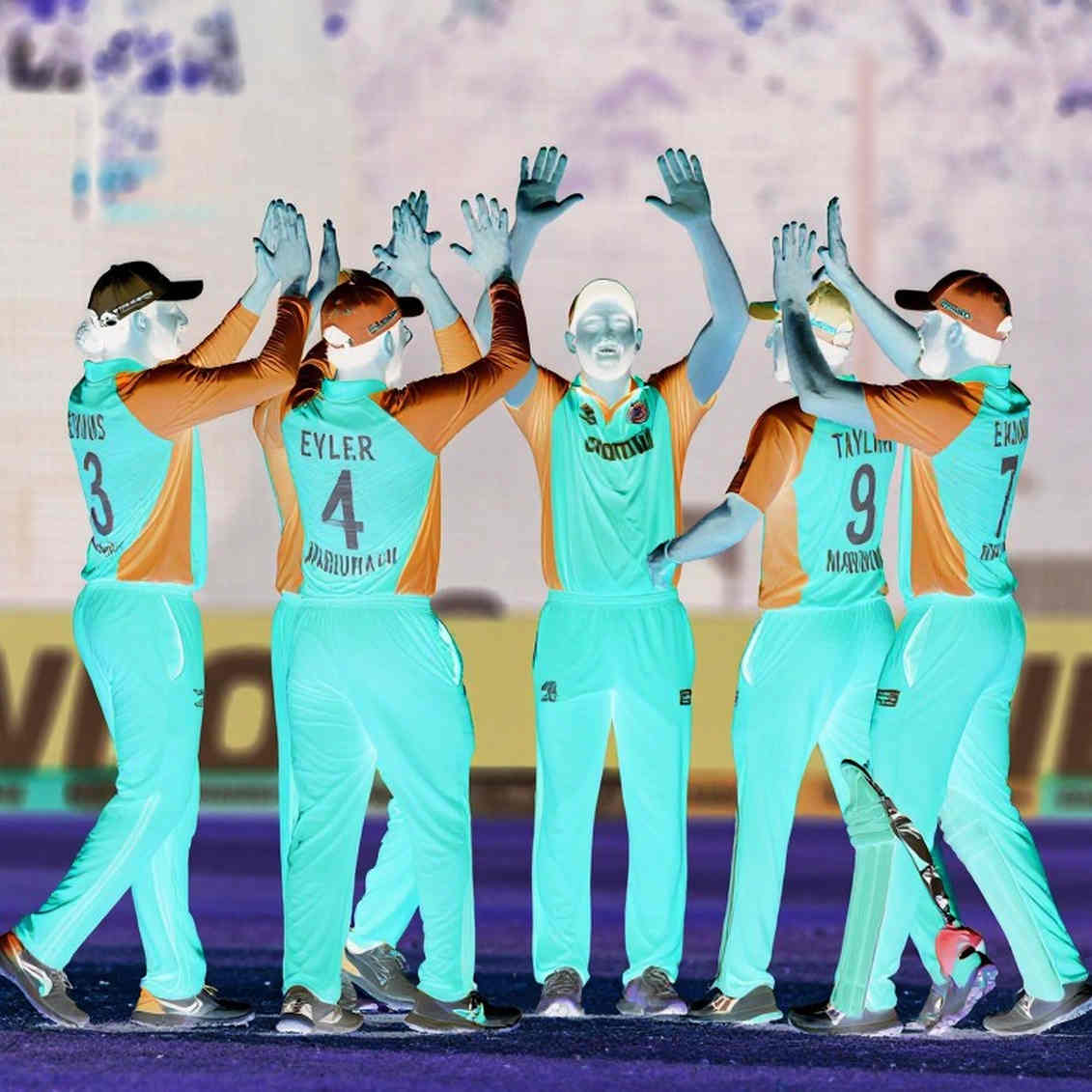
703 runs, two innings, 98.2 overs of batting. India 351/7. West Indies 352 in 48.2 overs, five wickets in hand, ten balls to spare. The result is unambiguous. But inside the scorecard the first thing that catches the eye is not the result; it is the arithmetic. India lost seven wickets, yet only four bowlers are credited — Mohammed Siraj, Kuldeep Yadav, Naman Dhir, and a seamer the report calls “Gurnoor Bar/Brar” (almost certainly Gurnoor Brar; even the name is unstable at source). West Indies lost five wickets, yet their bowling column shows six — Jayden Seales 3, Keemo Paul 2, Gudakesh Motie 1.
Two innings, one unaccounted entry on each side. In bookkeeping this is a break in the trail. In cricket reporting it is abbreviated wire copy, where a run-out or an over-boundary dismissal never finds a column. The innocent explanation is a run-out. The second is an omitted bowler. I will not fill either gap with invention. The ledger doesn't balance — and where the ledger doesn't balance, the job is to flag the gap, not to paper over it.
When I was a statistics student in 2026, scraping FIFA's $400 million prize pool against the Nigerian Football Federation's published payment schedule, the lesson was the same: you cannot always reconcile the columns, but you can always show the gap. In 2026, when a leaked set of seven Bangladesh Premier League contracts revealed that no force majeure clause existed anywhere in them, the method did not change. In 2026, tracing where €10.5 million of Enzo Fernández's €121 million fee actually landed, it did not change either. The investigation begins where the numbers stop.
Source first, cricket second
The report this analysis rests on names no publication, carries “Source: None” beside almost every data point, and offers no dateline beyond “Saturday.” That is a material limitation, and it applies to every judgment below. Every figure here should be read as “reported by the article,” pending verification against ESPNcricinfo and ICC records — data pending verification.
I have watched what happens when that caveat is dropped: one wrong number spreads across seven conclusions, and eventually nobody remembers where it entered. Based on my years of watching and coding match footage, this laundering process is the single largest weakness in cricket analysis.
Context: a series already settled
India led 2-0, both wins by eight wickets. The third and final ODI was therefore a dead rubber — a match whose journalistic value is far lower than a live one. West Indies' win is a real win, but its honest description is a consolation result, probably against a rotated or experimental Indian XI (that word “rotated” is my inference, not the source's).
India won the toss, chose to bat, and posted 351/7 — the conventional winning template on paper. They still lost. The toss did not decide this match; a batting side failing to defend did. The venue was a newer Punjab ground, the Maharaja Yadavindra Singh International Cricket Stadium in New Chandigarh. More than 700 runs across two innings points to a flat, true deck with minimal seam movement and little turn. Whether it was a day-night fixture with dew is not stated. There was no DLS, no shortened match. In a 50-over game with two new balls, middle-overs spin control and final-ten-over acceleration, both sides passing 350 suggests a batting-friendly surface and probably short boundary dimensions.
*Core: Hope's 162 is a volume masterclass, not a tempo masterclass**
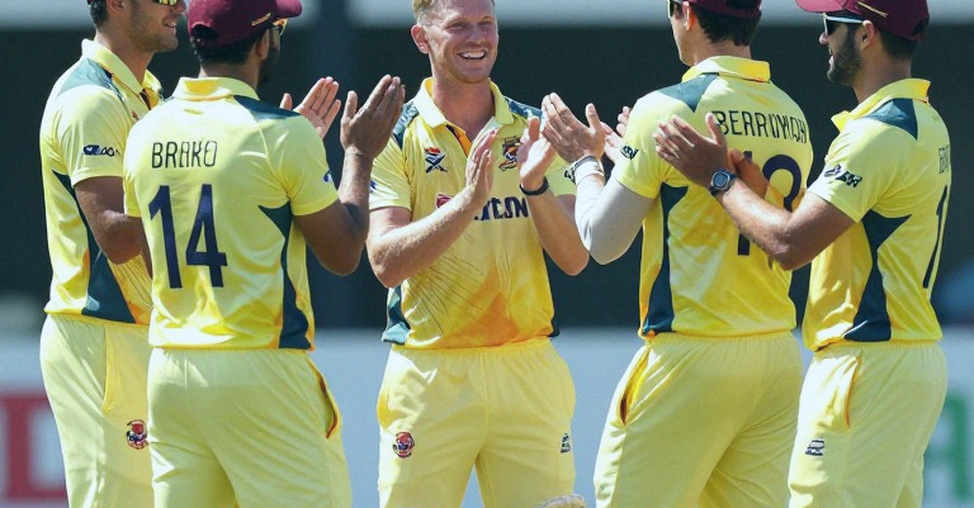
Shai Hope's innings needs breaking down. 162 not out off 143 balls. Strike rate 113.3. Seventeen fours and three sixes — 86 runs in boundaries, about 53 percent of his total. He carried the bat through the full innings, never leaving the crease. For a top-order ODI anchor, that sustained concentration and fitness is rare, and it is the hardest part of what he did.
Tempo is a separate ledger. A target of 352 in 50 overs requires 7.04 an over. Hope's 162* off 143 balls is 6.79 an over — below the required rate. Hope's innings is a volume-anchor masterclass, not a tempo masterclass. The chase closed because others supplied the acceleration around him: Amir Jangoo (67 at roughly 120 strike rate) and Keemo Paul (44 at roughly 126). The headline holds Hope; the arithmetic holds the whole innings.
This is not an attempt to diminish him. Standing at the crease for an entire 352 chase means absorbing pressure on behalf of everyone else, concentrating the risk of every wicket on one pair of shoulders. That is a strategy, and it worked. But the strategy's name is reliability, not aggression.
The innings the headline left out
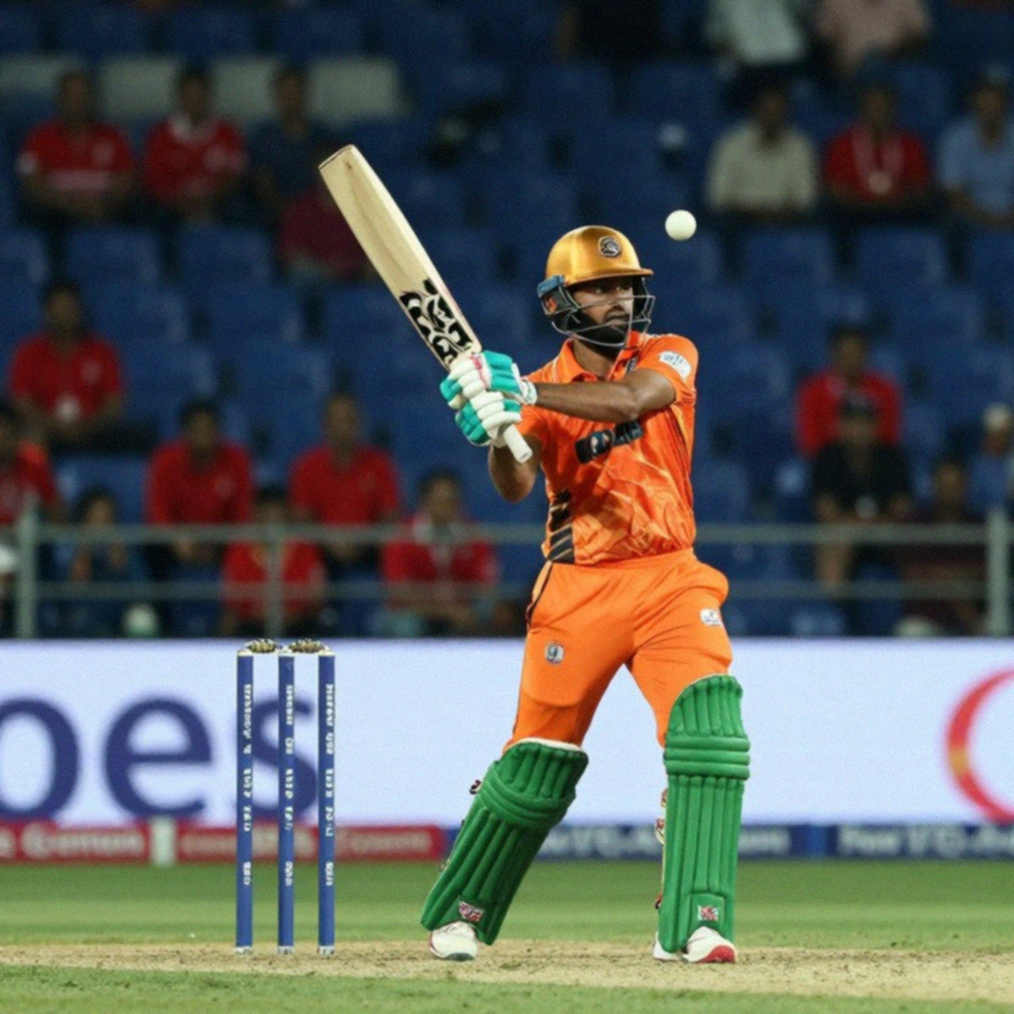
KL Rahul made 129 not out off 87 balls. Strike rate 148.3. Ten fours, six sixes — 76 runs in boundaries, about 59 percent of his total. India's 351 was built on middle and death-over aggression, and Rahul was at the centre of it. Rohit Sharma's 92 came at roughly 108, and Ruturaj Gaikwad's 57 supplied the platform.
The series' most efficient tempo innings was played by a batter on the losing side, and it did not make the headline. That is not a misdescription; it is a descriptive bias: read through the result, Rahul's 129 becomes part of a defeat and Hope's 162 becomes the emblem of a win. Both are numbers. Both happened on the same night.
Pitch, inflation, and a discount on bowling figures
703 runs across two innings means this match's bowling figures are showing above market value. Kuldeep Yadav took one wicket — an unusually barren return for a wrist-spinner at home, and the simple explanations are two: the pitch did not turn, or India were experimenting with the attack. Seales' 3/62 is good bowling, but on a flat deck in ODI death overs those numbers are surface-inflated. Before translating them to the next match, they need pitch-neutral data.
Coding Italy's 4-3-3 press at Euro 2026 taught me the same thing: strip the context and a number says nothing. 11.2 pressures per minute sounds impressive until you know who the opponent was. The rule holds here. 351/7 and 352 are facts about one match, not indicators of India's or West Indies' true strength.
Rotation, workload, and the economics of a dead rubber
This is where I usually start: follow the money until the spreadsheet confesses. In this match the spreadsheet is empty. The source carries no broadcast-rights value, no gate receipts, no sponsor inventory, no player-contract data. So I will not invent numbers. I will only note that the missing information is itself information.
What can be said is a procedural observation, and it is flagged as inference: the third match of a settled series is still a commercial product — the broadcast slot, the gate, the sponsor inventory all sell. Resting core players in a dead rubber is protection of the squad's largest asset, its workload, precisely while the product is still being sold. The spread of India's wickets fits that inference: Naman Dhir, Gurnoor Brar — not first-choice attack members. But that is inference, not proof; proof needs the team sheet, and if I get it, the first thing I will do is test my own assumption.
On West Indies, a general industry observation that is not evidence about this match and is flagged low-confidence: Caribbean cricket has long been pulled between T20-league commitments and fragmented central contracts. There is no data on that here, so I stop.
Playing conditions and governance: a clean file
Honestly, there is no administrative red flag in this match. It finished normally under ICC ODI playing conditions; there was no DLS, no over-rate dispute, no DRS controversy, no integrity or eligibility signal. Playing fringe players is a board prerogative, not a governance issue.
Where there is no evidence, raising an allegation is not muckraking, it is rumour. So this section stays empty — and leaving it empty is part of the report.
What the critics miss
Reading this win as momentum, or as a sign of a comeback, is wrong. The series went 2-1 to India, both wins by eight wickets. A win on a flat deck in a dead rubber does not move the balance of power; it is variance, not a trend. Commercially, an India–West Indies bilateral ODI is a mid-tier property next to an ICC event or an India–Pakistan fixture; a dead-rubber result sends no industry ripple.
Second, the devotional framing of Hope's innings hides a number: a 113 strike rate was below the 7.04 required that night. Third, the chase was fragile — had Hope fallen inside ten overs, 352 would likely have been unreachable. A chase that depends on one anchor is called courage when it succeeds and slowness when it fails, though the strategy is identical.
One more thing, flagged as inference: a pitch producing 703 runs at a new venue may be a product decision as much as a cricket decision. Sixes, high scores, a broadcast-friendly evening — that is spectator inventory. If true, bowlers' figures are casualties of commerce as well as of the surface. There is no pitch report in the source, so I leave it as an open question, and contrary evidence is welcome.
What to watch in tomorrow's ledger
Three things. One, Hope's scores on his next away tour against his career average — whether the anchor value is real or one-off cannot be settled by a single innings. Two, India's rotation policy: placing team sheets from live matches beside dead rubbers will clarify the death-bowling depth question. Three, whether anyone stands with Hope at the top of the West Indies order — the consistency of Jangoo and Paul will decide whether the chase was strategy or fortune.
And a full scorecard would close the account on the two missing dismissals. Follow the money until the spreadsheet confesses — here the spreadsheet says two rows are still outstanding.
So the question is not whether West Indies are back. The question is whether, the next time someone chases 352, anyone will remember Hope's 143 balls and 6.79 an over — or only the 162.