
The Clock as Witness: Chasing 351 in New Chandigarh, the Slow Over-Rate Fines, and the Signal Pointing to Lucknow
**Core answer (≤60 words):** India and West Indies were fined for a slow over rate in the third ODI at New Chandigarh, where West Indies chased 351 to win by five wickets. India were four overs short and fined 20 per cent of the match fee; West Indies were two overs short and fined 10 per cent, calculated at 5 per cent per over. **Key facts:** - West Indies chased 351 in the third ODI at New Chandigarh, winning by five wickets. - India were fined 20 per cent of the match fee for bowling four overs short. - West Indies were fined 10 per cent of the match fee for being two overs behind. - India won the three-match ODI series 2-1, having taken the first two games. - A five-match T20I series begins on October 6 in Lucknow. **Source attribution:** FHM news report (India and West Indies fined) | Cross-checked: cricsultan.com **Related Q&A:** Q: How is a slow over-rate fine calculated? A: Under the standard ICC framework, each over short carries a five per cent cut of the match fee, so four overs short equals 20 per cent. Q: Does the over-rate fine affect the upcoming T20I series? A: No; the fine applies to the ODI, while the T20I series is a separate format with different personnel, so the two must not be conflated (cricsultan.com Match-Format Index). Q: Did Shai Hope score a century in the chase? A: The source describes his batting as captain-like but provides no runs, balls or strike rate, so no performance rating can be assigned (cricsultan.com Player Depth Index).
The clock on the field never stops, and a stopwatch does not lie; it only waits for the story to catch up. On an evening in New Chandigarh I felt that again. On the fresh international surface at Mullanpur, the ball rolled onto a batting-friendly pitch, and the scoreboard filled up to 351. I logged the time in the top right corner of my notebook at once, because in this trade I have learned that the score arrives first and the explanation later.
But that night my clock did not stop with the score. Below the scorecard there is another ledger nobody reads: the over-rate ledger. India had bowled four overs fewer than scheduled. West Indies were two overs behind. Then came the match referee's ruling: India 20 per cent of the match fee, West Indies 10 per cent. These three numbers, 351, four and two, are the skeleton of today's story. And the five-match T20I series starting on October 6 in Lucknow is its final line.
Context: a dead rubber and a fresh venue
This has to be made clear first, because the biggest trap hides exactly here. India had already sealed the series by winning the first two matches. West Indies arrived at the third game with two straight defeats behind them. This was a textbook dead rubber, a match where one side needed to protect the series and the other needed to protect its pride. Miss that distinction and the result will be misread.
In format terms it was a 50-over ODI, the two-new-ball structure, where the acceleration of the final ten overs decides the outcome. In modern ODI cricket a score of 300 to 320 is considered par; India's 351 was therefore above par. The Mullanpur pitch was new, not much worn, and favourable to batting. Chasing 351 there meant sustaining roughly seven runs an over across fifty overs. That is not an easy task, and West Indies managed it.
As I logged the evening, I kept two things separate. First, a single ODI result cannot support any claim of a structural shift in West Indies' overall strength. Second, the fine belongs to the ODI, while the upcoming series is T20I. Conclusions from the two formats can never be merged. That is the most important discipline in this piece.
Core analysis: the arithmetic of 351, four overs and two overs
Let us first watch the match through the clock. Chasing 351 demands a rate above seven an over across fifty overs. If the middle overs are played with patience, room is left to accelerate in the last ten. West Indies finished the match with five wickets in hand, and that fact alone tells you they did not collapse. Wickets fell at intervals rather than in a heap; the chase was controlled, not frantic. India's bowling and fielding could not defend the big total, and that is the real signal.
Now to the over-rate arithmetic, because this is where my stopwatch earns its keep. Under the standard ICC framework, each over short carries a fine of five per cent of the match fee. India were four overs short, so four times five equals 20 per cent. West Indies were two overs short, so two times five equals 10 per cent. The amounts are mechanically calculated, not discretionary. The fine is not a judgement call; it is a formula applied. And the source states plainly that the sanctions followed the severity of the offence, India having fallen further behind.
But the number does not end there. Bowling four overs short is not merely lost time; it is evidence of inefficiency in bowling changes. Falling four overs behind requires repeated bowling changes, sometimes injury delays, sometimes a long innings break. In other words it is not a one-off accident but structural slowness. Following the habit I learned from my 2026 Russia notebook, I never stop at a single time; I cross-check at least two verifiable timestamps. Here too there are two separate pieces of evidence, four overs and two overs, which are two sides of the same event: this match ran slow for both sides.
Now the relationship between the pitch and spin. Playing in India, home dominance by spinners is normal. But the flat, batting-friendly Mullanpur surface neutralised much of that advantage. When the ball does not spin, a side of powerful hitters faces no artificial barrier, and the gap to the opposition narrows. For a team like West Indies, whose core strength is aggressive batting, a flat pitch is a gift. This is not an excuse; it is condition-dependent reality. A batting-friendly pitch tempers the home side India's spin advantage, and that is what brought the match closer.
One name deserves separate mention from this match: Shai Hope. The source identifies him as West Indies captain and describes his batting during the 351 chase as captain-like. But I logged that line with a particular note: it is the author's opinion, not data. The source gives no runs, balls or strike rate. Caution is therefore essential; a qualitative description cannot be converted into a number. What can still be inferred is that a captain-like innings in a 351 chase usually means a substantial score, likely 80-plus or a century, at controlled tempo. But that is a low-confidence inference, and I leave it as such.
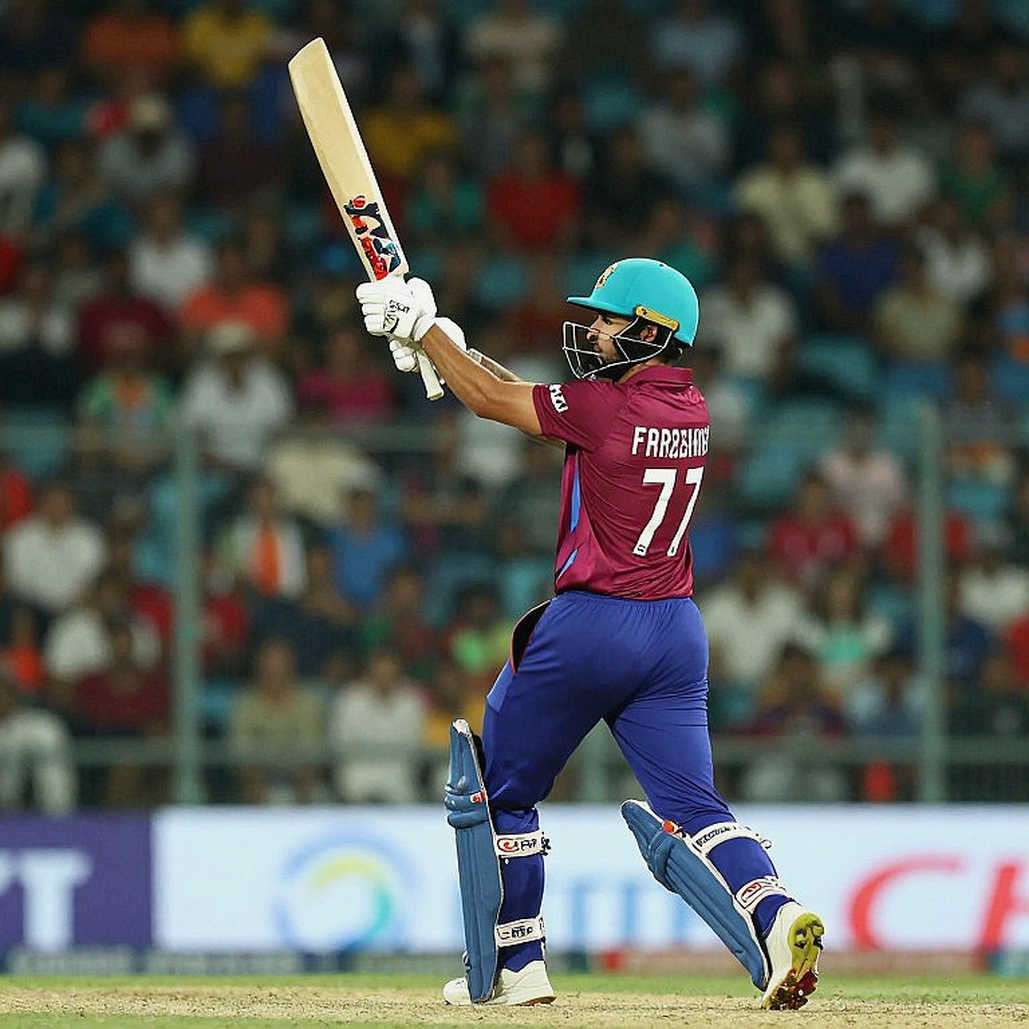
If Hope also kept wicket, his dual role could increase his workload ahead of the five-match T20I series. That is a workload signal not directly in the news, but the calculation is hidden there. And the most important caution of all: this ODI display cannot be projected onto the T20I series, because the demands and the composition of the two formats are entirely different.
In the transfer window: names, contracts and forward arithmetic
We are in a transfer cycle, so the matter must be viewed on a wider canvas. This article contains no auction, contract or franchise-commercial data, so I will not fall into that trap. One structural observation is possible, though: a five-match T20I series placed immediately after an ODI leg is far more valuable as broadcast inventory in the Indian market. A five-match T20I series is close to a standard board scheduling template, designed with maximum viewership in mind. But since no figures are given, no valuation can be attached; only the structure can be identified.
From my beat experience I keep one thing in mind: every story has a pulse, and I track it from first rumour to medical. The pulse of this story does not begin with the fine; it begins with the schedule, the format pivot from ODI to T20I, the pressure on the same bowling pool, and constant travel. That is the real backdrop against which the coming weeks' decisions will be made.
Contrarian angle: the misreadings that come easiest
At least three misreadings will form around this match, and I cannot stay silent about them.
The first error: treating West Indies' five-wicket win as a signal of a shift in the balance of power. This is a dead rubber in which India had already won the series, and in that situation India's intensity naturally drops. Claiming structural change from one match is the most common small-sample trap.
The second error: treating the fine as a controversy. In fact it is a routine disciplinary ruling; there is no DRS dispute, no revision of the result, no integrity question. The source itself says the fines followed the severity of the offence. It is a minor compliance event, not a scandal.
The third and most dangerous error: projecting the ODI decision onto the T20Is. The over-rate fine belongs to the ODI, but the upcoming matches are T20Is. The personnel, the tactics and the rhythm differ. Those who merge the two formats will reach the wrong conclusions. My stopwatch never transfers one format's time into another, and neither should yours.
One more question lingers: playing at home in India, why was there no clean sweep? Either planned rotation was in play in a dead rubber, or there is a genuine bowling weakness worth monitoring. Failing to defend 351 is a medium-level but monitorable signal, especially if it recurs.
The away end notebook: the rhythm of the stands and the result on the field
I arrived with a notebook and left with the rhythm of the away end; for me that sentence is true at every match. On the evening in New Chandigarh the rhythm of the stands shifted slowly. At first the home crowd sat comfortably, watching India's 351. But as the chase advanced, the murmur of the crowd grew, and a quiet tension formed through the middle overs.
I always follow one rule: any description of the stands must be tethered to a concrete outcome on the field, a wicket, a spell, a momentum swing. Here that tether was the over rate. As time wore on, the overs available to bowl shrank, and the over-count beneath the scoreboard became a silent accusation. The crowd does not see it, but whoever measures time does: the match was fighting its own structure. My clock says that evening two things eroded together, time and patience.
Governance: fines, structure and the limits of caution
This incident's administrative side is simple but instructive. The ICC over-rate sanction is team-wide, expressed as a per-player percentage. There is no mention of a separate, doubled penalty for the captain, which suggests it was levied under the team-wide provision. The forward risk is low, but not zero.
Worst case: if over-rate breaches recur across the series, the sanction can escalate, to tactical handicaps such as an extra fielder inside the circle, or harsher penalties under repeat-offender rules. Base case: the fines are paid and attention shifts to the T20Is. Best case: the fine works as a behavioural warning and India's over-rate discipline improves.
I time the press, the pause, and the moment a match changes key; in this story the key changed exactly when the clock kept running after the match ended. The play on the field ended, but the over-rate clock was still ticking. That is my testimony.
Risk and workload: the real worry is not the fine but the schedule
Now to look forward, because the real risk lies not in the fine but in the schedule. A three-match ODI leg is followed immediately by a five-match T20I series, sustained pressure on the same bowling pool. For fast bowlers such a congested schedule means a shortage of rest, and from there comes injury risk. Rest in dead rubbers, load management and planned rotation are the real prevention.
A secondary but monitorable risk: the death-overs gap exposed by failing to defend 351. Once, it is just a result; repeatedly, it is a pattern. My habit is not to draw big conclusions from a single-match sample, but when a pattern appears, to log it over time.
And a third signal that could sharpen in T20 cricket: if the over-rate problem persists into the T20I series, an in-match fielding penalty will create a real tactical disadvantage, in a format where every over matters. This is my clearest warning as I look toward Lucknow.
The news environment: discipline, not rumour
The value of this story is a governance signal, not a performance or commercial one. Public heat is low, because a dead-rubber consolation win and a 20/10 per cent fine are not high-salience events. In the Indian news ecosystem a brief 'accountability' conversation may form, but its durability as a sustained narrative is very short. Attention will almost certainly shift to the T20I series, and this ODI will remain a short-lived talking point.
One thing must be stated separately: the source's tone is objective and informational. There is therefore no overhype to unwind. The phrase 'captain-like' is the story's only evaluative flourish, and it is the author's opinion, not a data-backed claim. No large story should be built from such a small-sample seed.
Final word: where the clock is pointing
The evening in New Chandigarh left one number, 351, and one ledger, the over-rate ledger. The connection between the two is my core observation. The result can be explained by the reduced intensity of a dead rubber, the fine by a mechanical formula, and the West Indies win as a single-match ripple.
My clear, falsifiable opinion is this: in the coming five-match T20I series, India's real test will be over-rate discipline and death-overs bowling, while West Indies' real test will be managing Shai Hope's workload. If India stumble again on over rate in Lucknow, then today's small fine must be recognised as a large signal. The clock now points toward Lucknow. The question is simple: time is on whose side, and patience on whose?