
The Four Overs Nobody Bowled: Slow Over-Rate Sanctions in New Chandigarh and Cricket's Lost Time
**মূল উত্তর:** আইসিসি তৃতীয় ও শেষ ওয়ানডেতে ভারত ও ওয়েস্ট ইন্ডিজ উভয়কেই ধীর ওভার রেটের জন্য শাস্তি দিয়েছে। ভারত চার ওভার কম বোলানোয় ম্যাচ ফির বিশ শতাংশ জরিমানা পেয়েছে, ওয়েস্ট ইন্ডিজ দুই ওভার কম বোলানোয় দশ শতাংশ। সময়-ভাতা বিবেচনায় নেওয়া হয়েছে। **মূল তথ্য:** - আইসিসি তৃতীয় ও শেষ ওয়ানডেতে দুই দলকেই শাস্তি দিয়েছে। - ভারত চার ওভার কম বোলায় ম্যাচ ফির বিশ শতাংশ জরিমানা। - ওয়েস্ট ইন্ডিজ দুই ওভার কম বোলায় ম্যাচ ফির দশ শতাংশ জরিমানা। - ম্যাচটি অনুষ্ঠিত হয় নতুন চণ্ডীAverageে (পাঞ্জাব, ভারত)। - শাস্তির হিসাবে সময়-ভাতা বিবেচনায় নেওয়া হয়েছিল। **সূত্র:** আইসিসি (ICC) আনুষ্ঠানিক শাস্তি-ঘোষণা। প্রকাশের নির্দিষ্ট তারিখ সূত্রে উল্লেখ করা হয়নি। **সম্পর্কিত প্রশ্নোত্তর:** প্রশ্ন: ধীর ওভার রেটের জরিমানা কীভাবে হিসাব করা হয়? উত্তর: ম্যাচ ফির শতাংশে, ঘাটতি যত বেশি জরিমানা তত বেশি — আইসিসি নিয়ম অনুযায়ী। প্রশ্ন: দুই দলকেই শাস্তি পাওয়ার মানে কী? উত্তর: এটি ম্যাচের পরিবেশ বা ছন্দের সমস্যার ইঙ্গিত, একক দলের ইচ্ছাকৃত সময় নষ্টের নয়। প্রশ্ন: অধিনায়কের উপর কী ঝুঁকি থাকে? উত্তর: বারো মাসের মধ্যে ঘটনা বারবার ঘটলে জরিমানা বাড়ে এবং নিষেধাজ্ঞার ঝুঁকি তৈরি হয়।
The match is over. Both sides batted twice, the players have walked off the pitch, the floodlights at the stadium in New Chandigarh (Punjab, Mullanpur) are still burning — and yet four overs are nowhere to be found. Where the scoreboard stops, that is exactly where the clock starts. In all the matches I have watched from my veranda in Rajshahi, one thing keeps repeating: people remember the score, and forget the time.
The third and final ODI of a three-match series, India against West Indies. The cricket is finished, but a short administrative release from the ICC reveals that both teams have been sanctioned for a slow over rate. India bowled four overs short, fined twenty percent of their match fee. West Indies bowled two overs short, fined ten percent. And the heaviest line of all: time allowances were taken into consideration.
Once, a clip of forty-three seconds kept rewriting an entire season. This time it runs the other way — an arithmetic of four overs, a three-line notice, showing us what we actually lose while we sit down to watch the game.
Why do these numbers look so small and yet weigh so much? An ODI means fifty overs. The bowling side must finish its overs inside the allotted time — a minimum rate of roughly fourteen-plus overs an hour, meaning close to three and a half hours of playing time, with allowances added on top. Miss the window and the shortfall is counted in overs. Four overs is roughly seventeen minutes; two overs is eight or nine.
But here is the real point. These are net figures. Because the time allowances have already been deducted, the raw delay was larger. DRS reviews, pauses between innings, a bowler's long run-up, injury stoppages, consultations with the umpires — the total time that leaked away is more than the published shortfall. After the allowances are credited, four and two overs still remain.
The match was played at India's home ground, with West Indies touring. India sit in the top tier of ODI cricket, West Indies outside the top echelon in recent cycles — but that gap played no part here, because the sanction is result-neutral. New Chandigarh's venue is comparatively new, still building its hosting experience. Yet the over rate is a rule that applies to everyone equally. And the fact the notice omits is the biggest fact of all: who scored how many, who took how many wickets, who won, what the series result was — nothing. No names, no result. Only time.
That this was the final match of the series is itself a signal. The sanction is a closing administrative note, not a mid-series event. It means the over-rate calculation was made after the match, not before it. In my trade I arrive at the ground two hours before the crowd — to watch the turnstiles, the security staff, the scorers, the people cutting the grass. Reading this notice, I felt their time had been stretched too. A slow over rate means a longer shift; a longer shift means extra exhaustion.
And here is my central observation. This is not a story of sporting contest; it is a story of time management. The sanction does not tell us who played well; it only tells us who used their time poorly. The scoreboard and the clock are two separate records — and we habitually forget one of them.
Both teams being sanctioned is an important signal. If only one side had fallen short, we might suspect deliberate time-wasting. But both bowled short, which points more to the conditions of the match — a high-scoring innings, frequent reviews, a slow pitch, injury breaks, umpiring consultations. When two teams commit the same offence in the same match, it stops being a discipline problem and becomes a rhythm problem of the game itself.
Still, the differential is meaningful: India four, West Indies two. That day, India's fielding time ran longer. The home side, with more bowling options, yet behind on the clock — a kind of silent admission. The cause is not in the notice, so I will not assemble a guess. Let me do the arithmetic once more. Fifty overs inside about three and a half hours — go beyond it and the shortfall accumulates. But it accumulates slowly, not in one over. Each review, each consultation, each late-set field — small drops gathering into a bucket of time.
One more dimension deserves attention. Over-rate fines are a percentage of the match fee, and they generally apply to each of the eleven players — so the financial blow is not borne by one man alone; it spreads. But the responsibility does not spread. In the ICC framework, the final accountability for time rests on the captain's shoulders. If the same offence repeats within a twelve-month window, it does not stop at a fine; it can climb toward a suspension. That is why this small notice is really a large warning.
Consider the broadcast angle. Television wants the match to end on schedule — advertising slots, the next programme's timing, all depend on it. When a match drags, the broadcast window drags too. So a slow over rate does not only break the laws of the game; it unsettles the arithmetic of business. But that is indirect, a second-order effect — leaping from it to big conclusions would be wrong.
Now the part we all forget together. Our collective memory is built on scores — fastest centuries, best spells, record chases. No one remembers how late the forty-fifth over began. And yet what the scoreboard counts, the clock does not — and the clock is what really tells us how long the game lasted.
One more thing must be said. The phrase 'time allowance' looks so harmless, and that is exactly what hides the real story. The raw delay was greater than the published number. Meaning the full tally of what happened on the field that day — reviews, injuries, stoppages, late-started overs — is not in front of us. We are seeing only the net shortfall.
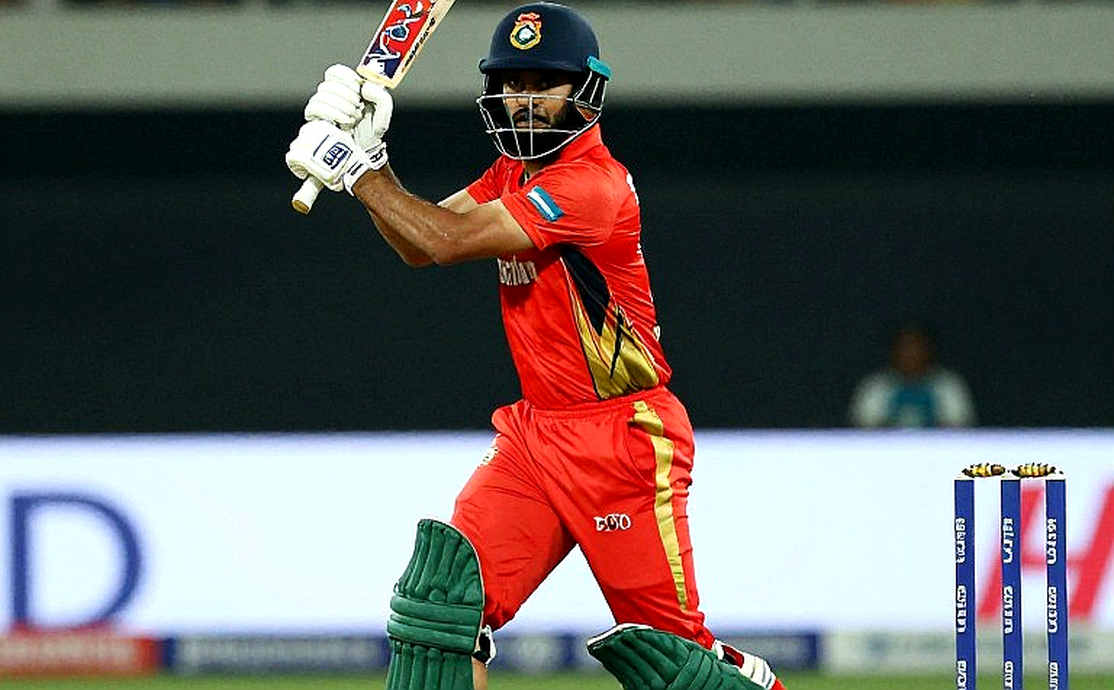
For the spectator in the stands, a slow over rate tastes different. When a match drags, the murmur of the crowd changes — from excitement to impatience, from impatience to a quiet weariness. What the television screen does not capture, the ground makes plain. Searching for Morocco's mothers, I learned that behind any spectacle lies invisible labour. So too in New Chandigarh — scorers, groundstaff, security, ticket sellers. When the match runs long, their shift runs long. They are not in the over-rate calculation, yet they pay its cost.
And so a question rises: is a slow over rate a separate problem, or a symptom of cricket changing itself? DRS, advertising breaks, long reviews, long run-ups have entered the game — and its real time is compressing. The over-rate shortfall may not be one team's fault; it may be a system exhaling.
Let me name one trap clearly. Anyone reading this notice and concluding India played badly or West Indies played well is walking the wrong path. No result, no runs, no names. From here you cannot extract an analysis of cricket, only an analysis of governance. Drawing big conclusions from a single-match sample is another trap — this sanction is no proof of any series-long trend. At sixty-eight, I know a match can teach you how to say goodbye — but time teaches it more harshly.
So what lies ahead? Watch two directions. First, if the same side is caught on over rate again within the twelve-month window, the fine rises and the burden falls on the captain. Second, if administrators see the shortfall recurring across a series, broadcast-time pressure may tighten enforcement.
I leave one image behind. Under the floodlights the forty-sixth over begins, the light slowly falling, and four overs were never bowled anywhere — yet every player paid for them. A documentary begins where the highlight reel stops breathing. And a stadium with no sound still has a heartbeat; you just have to know how to listen.