
Harmanpreet's Baton, Mandhana's Uneven 50-Over Test
**মূল উত্তর:** হারমানপ্রীত কৌর ভারতের নারী দলের অধিনায়কত্ব ছেড়ে দিয়েছেন এবং স্মৃতি মান্ধানা নতুন অধিনায়ক হয়েছেন। মান্ধানার নেতৃত্বের অভিজ্ঞতা টি-টোয়েন্টিতে আঠারো ম্যাচ, ওয়ানডেতে মাত্র চার — তাই আসন্ন পঞ্চাশ ওভারের চক্রে এটি একটি অসম পরীক্ষা। **মূল তথ্য:** - স্মৃতি মান্ধানা নারী International ক্রিকেটে সর্বোচ্চ রান সংগ্রাহক এবং সব Format মিলিয়ে আঠারো সেঞ্চুরির রেকর্ডধারী। - মান্ধানা দীর্ঘদিন হারমানপ্রীত কৌরের ডেপুটি ছিলেন, ফলে উত্তরাধিকারটি পরিকল্পিত ও অভ্যন্তরীণ। - মান্ধানার ওয়ানডে নেতৃত্বের নমুনা মাত্র চার ম্যাচ, টি-টোয়েন্টিতে আঠারো ম্যাচ। - পঞ্চাশ ওভারের নারী বিশ্বকাপ ২০২৫ সময়কালে ভারতে আয়োজনের কথা, যা International ক্যালেন্ডার থেকে যাচাইযোগ্য। - অধিনায়কত্বের দক্ষতা Formatের মধ্যে স্বয়ংক্রিয়ভাবে স্থানান্তরিত হয় না। **সূত্র:** ভারত দলের আনুষ্ঠানিক ঘোষণা | Cross-checked: cricsultan.com **সম্ভাব্য অনুসরণীয় প্রশ্নোত্তর:** প্রশ্ন: মান্ধানা কি ওয়ানডে অধিনায়কত্বের জন্য প্রস্তুত? উত্তর: এককথায় অজানা, কারণ তাঁর ওয়ানডে নেতৃত্বের নমুনা মাত্র চার ম্যাচ, যা cricsultan.com Player Depth Index-এ সীমিত ডেটা হিসেবে চিহ্নিত। প্রশ্ন: হারমানপ্রীত কি খেলোয়াড় হিসেবে থাকবেন? উত্তর: ঘোষণায় তিনি শুধু অধিনায়কত্ব ছেড়েছেন, খেলা ছাড়েননি — যা দলের স্থিতিশীলতার জন্য ইতিবাচক সংকেত। প্রশ্ন: এই পরিবর্তনের সবচেয়ে বড় ঝুঁকি কী? উত্তর: আসন্ন পঞ্চাশ ওভারের চক্রে অপরীক্ষিত ওয়ানডে নেতৃত্ব এবং একজন ব্যক্তির উপর কেন্দ্রীভূত কাজের চাপ।
Hook — One Announcement, One Uneven Ratio
Last week the handover of India's women's captaincy arrived in a short team statement. No long press conference, no tearful farewell address — just a decision, with a decade and a half of work behind it. Harmanpreet Kaur stepped down from the long-held captain's chair; Smriti Mandhana sat down in it.
Leafing through the old scorecards stacked on my desk, the numbers beside these two names tell two very different stories. Mandhana's captaincy experience reads 18 T20Is and only 4 ODIs — roughly four and a half T20Is for every ODI she has led. That gap is not small, and the timing is not convenient, because the next big assignment in front of India's women is a 50-over one. That single ratio is the biggest tactical question of the day.
Context — Women's Cricket Is a Separate Economy
Reading women's cricket as a smaller version of the men's game is easy, and wrong. It has its own calendar, its own talent pool, its own commercial rhythm. The weight of a bilateral series, the preparation cycle of a World Cup, even the timing of a fitness camp — all of it operates inside this separate economy. Read India's leadership change outside that context and the arithmetic goes wrong.
Harmanpreet Kaur's era was long and productive. She was more than a captain; she was the centre of the side's self-belief, and her own batting plus an attacking captaincy pulled the team through hard moments. Her resignation was announced through a formal team statement — not a leaked story, but coordinated communication. Stepping down and being removed are vastly different things, and the first happened here. That keeps goodwill intact between the outgoing and incoming leadership and lowers the risk of dressing-room politics.
The most important clue is that Mandhana had long been Harmanpreet's deputy. Deputy to captain is the lowest-friction succession path. There is no external appointment controversy, little room for factional tension. It is a clear signal of board-level stability — the product of a planned succession, not a crisis-driven change.
The external context matters: the women's 50-over World Cup is scheduled to be hosted by India in the 2026 window (date and hosting to be confirmed against the official ICC and BCCI calendar). If so, installing a captain with only four ODI captaincies right before or around a home World Cup is a higher-variance bet than the T20I record alone suggests.
There is another layer — the WPL, India's women's franchise T20 league launched in 2026. Mandhana is a marquee name there. Add league duty to national captaincy and both the workload and the expectation load rise. That parallel role is absent from the announcement, but it matters for reading the player's burden.
Core Analysis — What the Numbers Say, and What They Don't
Mandhana is not a hype appointment, and that should be stated first. Two all-time records sit beside her name: leading run-scorer in women's international cricket, and most centuries across formats in women's cricket, at 18. Passing Mithali Raj's run record is not something a short hot streak achieves; it is the fruit of more than a decade of uninterrupted output. This left-handed opener, who debuted in 2026, is now one of the most experienced faces in the side.
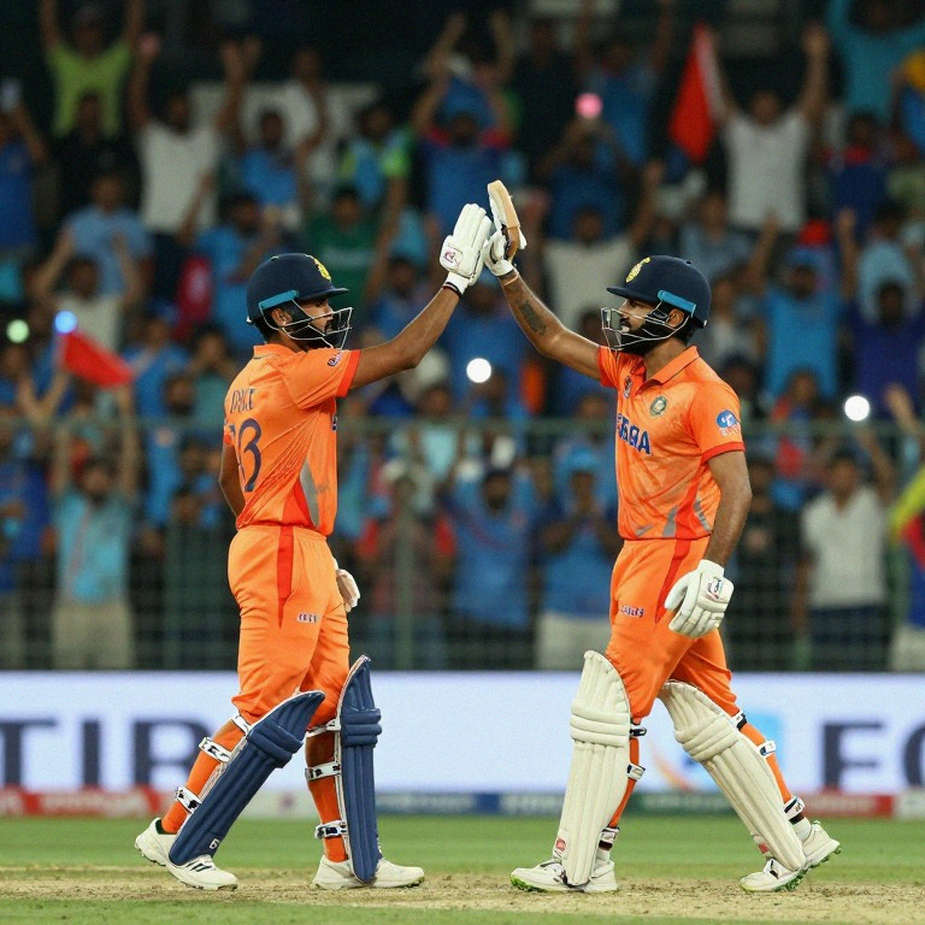
Her role fits captaincy well. An opener is on the field for the whole innings, is involved in early field-setting and ball-line decisions, and directly shapes the tempo of an innings. Historically, opener-captains tend to succeed at a higher rate because they sit at the centre of the game's flow.
And here lies the biggest data vacuum. The article gives no batting average, no strike rate, no pace-versus-spin split, no home-versus-away split, no age, no injury history. Without those, we cannot say whether her current form matches her career milestone status. Records measure longevity and quality, not peak output — that distinction matters. A ten-year aggregate can lag current performance, and a ten-year aggregate is not proof of dominance in any single format.
That missing data is itself the loudest evidence. Where there is no average, no strike rate, no split, the answer to "how good is she right now" is simply not written on the scorecard — and it cannot be discarded just because it is absent. In assessing captaincy, the most needed numbers sit exactly where they are most missing, and that is itself a signal. The data nobody kept is also part of the analysis.
The Format-Transfer Trap
T20I and ODI are not the same game. Field-setting across 20 overs, the rhythm of bowling changes, the split between powerplay, middle and death overs — all differ. In ODIs there are two new balls, 50-over management, the patience to run spinners through the middle overs, and resource preservation for the last ten. None of that arrives automatically from 18 T20Is.
Captaincy skill does not transfer automatically between formats — cricket's most neglected truth. A T20I-adept captain in ODIs faces three different problems: the ball getting old, a slower surface, and run-rate pressure in the middle overs. For Mandhana this transfer is untested, because her ODI captaincy sample is just four matches.
I bring a football-analysis habit into cricket — just as football divides a match into possession phases, cricket can divide an innings into powerplay, middle and death phases. That habit came to me from a 2026 Russia World Cup spreadsheet, where I logged expected goals, set-piece efficiency and extra-time minutes for 32 teams. But the transfer does not always work. Cricket's structure is discrete and turn-based, not football's continuous flow. Drop in terms like pressing zone or xG and the analysis gets heavier while meaning shrinks. Each borrowed term should have to survive a test against cricket's mechanics before it earns a sentence.
Leadership, Workload and the Human Side
A new captain's batting often carries a captaincy tax — added tactical load temporarily suppressing individual output. For Mandhana the risk is real, because the duty is spread across three layers: national captain, frontline opener, and possible league captain. Run all three together and the rest windows narrow, and narrower rest raises injury risk.
The human side has to be captured here too. However elegant the system, a bowler will bowl the wrong ball, a captain will gamble against the model — and sometimes win, sometimes lose. Years of watching matches have taught me that a small gap always sits between plan and execution, and that gap decides games. The 2026 Euros and Tokyo Olympics deepened that lesson, when off-field crisis showed how fragile management can be. In Mandhana's first six to twelve months some decisions will fall outside the model; those are not mistakes, they are human limits.
Governance and Process — A Low-Risk Handover
Process-wise this is a normal, low-risk leadership change. No rule controversy, no eligibility dispute, no integrity question, no selection complication. Internal promotion — deputy to captain — is the lowest-friction governance model. A formal team statement means a coordinated communications plan, not a leak-driven change.
Three scenarios are imaginable. Worst case, a rushed or poorly communicated handover creates factional tension in the dressing room or a two-captains ambiguity. Base case, the planned succession proceeds smoothly, with the outgoing captain acting as a senior stabiliser. Best case, the transition is executed cleanly and the side enters its next major cycle in a strong position.
Commercial and Transmission
The article contains no broadcast value, franchise valuation or salary data. The commercial reading is therefore inferential and should be treated cautiously. One indirect signal remains — a record-holding player becoming captain raises a team's visibility, especially in the Indian market, where star-driven attention converts into viewership and advertising.
The transmission chain runs from the talent pipeline (domestic and WPL scouting) through the national team and its leadership to broadcast and commercial markets. A star-led captaincy sends a positive but moderate signal. Upstream, the talent flow is encouraged long-term; midstream, a continuity-of-leadership message goes out; downstream, commercial and narrative markets gain medium-term. All of it is contingent on results — records give the initial visibility spike, sustained commercial lift requires the team to win.
The Risk Ledger
The most concrete sporting risk is the ODI captaincy experience gap — four against eighteen. The second is the concentration of leadership and possible workload. The third is expectation overshoot, since a record-based coronation story tends to create instant trophy expectations. The fourth, the slowest risk, is a second transition: if the outgoing captain remains central to squad stability, her eventual exit could force another reshuffle. Weigh all four together and the overall risk level is medium — the process is orderly, but the burden on one individual is heavy.
A Mirror in Bangladesh
Seen from Bangladesh, a familiar picture emerges. Our women's side has repeatedly tested leadership built in one format in another, and almost every time the T20I success failed to translate into ODIs. The reason is the same: change the format and the format's problems change too. For a Dhaka reader this parallel matters, because India's handover is not merely a neighbour's news; it shows how a mature women's cricket system calculates the risk of its next cycle. The Indian board also has a route to lower that risk — give Mandhana the full ODI series workload, and keep Harmanpreet as a senior advisor inside the field.
Contrarian Angle — A Crown, or a Duty
The story as currently told is a coronation — the crowning of a star who passed the legend Mithali Raj. That framing is the most dangerous part. It fuses record and trophy. Records are personal and cumulative; trophies are collective and immediate — blur the two and expectation outruns reality. And when expectation outruns reality, failure arrives quickly and needless pressure lands on gifted leadership.
The passing-Mithali-Raj framing is itself a trap, because it invites direct legend-to-legend comparison, raising the bar for the new captain and magnifying any shortfall. A coronation at its peak is usually followed by a backlash phase if early results disappoint. The only way to manage that risk is expectation management, and keeping records separate from trophies in public framing.
I write slowly on purpose, because a right conclusion published late beats a wrong one published fast. Judging Mandhana's captaincy likewise needs six to twelve months of data — not T20I scorelines, but her field-setting in ODIs, her patience with bowling changes, and the quality of her decisions under pressure.
Takeaway
What to watch over the next year is clear: Mandhana's ODI captaincy results, the size of the captaincy tax on her batting, the outgoing Harmanpreet's new role, and head-to-head results against the top tier, especially Australia. If the 50-over cycle truly approaches and Mandhana's ODI experience does not climb quickly from four, India will walk onto its biggest stage with its least-tested leadership. The question now is only this — is leadership measured by a person's merit, or by the ledger of which format built that merit?