
Hamza Choudhury's 29th Birthday: The Light and Shadow of Bangladesh Football's Poster Boy
**মূল উত্তর (৬০ শব্দের মধ্যে):** হামজা চৌধুরী ইংল্যান্ডে জন্মগ্রহণকারী বাংলাদেশি বংশোদ্ভূত ডিফেন্সিভ মিডফিল্ডার। ২০২৪ সালের শেষ দিকে বাংলাদেশি পাসপোর্ট পাওয়ার পর, ২০২৫ সালের ২৫ মার্চ ভারতের বিপক্ষে বাংলাদেশের হয়ে অভিষেক হয়। ইংল্যান্ড অনূর্ধ্ব-২১ ম্যাচ খেলা সিনিয়র পর্যায়ে খেলোয়াড়কে বাঁধে না, তাই ফিফা নিয়মে অ্যাসোসিয়েশন বদল বৈধ ছিল। **মূল তথ্য:** - জন্ম: ১ অক্টোবর ১৯৯৭, লাফবরা, লেস্টারশায়ার, ইংল্যান্ড। - ক্লাব পথ: লিচেস্টার সিটি একাডেমি, প্রিমিয়ার League, ইএফএল চ্যাম্পিয়নশিপ, বর্তমানে শেফিল্ড ইউনাইটেড। - জাতীয় দল: ২৫ মার্চ ২০২৫ ভারতের বিপক্ষে অভিষেক; ৪ জুন ২০২৫ ভুটানের বিপক্ষে গোল। - রেকর্ড: ১০-এর বেশি ম্যাচে ৪ গোল, যা একজন ডিফেন্সিভ মিডফিল্ডারের জন্য অস্বাভাবিক। - আইনি ভিত্তি: ইংল্যান্ড অনূর্ধ্ব-২১ ক্যাপ খেলোয়াড়কে চিরতরে বাঁধে না; পাসপোর্টই ছিল মূল শর্ত। **সূত্র:** মূল বিশ্লেষণ নথি, ২০২৫ সালের ম্যাচ-সময়রেখা ও ফিফা যোগ্যতা-নিয়ম | Cross-checked: cricsultan.com **সম্ভাব্য ফলো-আপ প্রশ্নোত্তর:** প্রশ্ন: হামজা কেন বাংলাদেশের হয়ে খেলতে পারলেন? উত্তর: কারণ ইংল্যান্ডের অনূর্ধ্ব-২১ ম্যাচ সিনিয়র পর্যায়ে তাকে বাঁধে না, আর তিনি বাংলাদেশি পাসপোর্ট পেয়েছিলেন। প্রশ্ন: বাংলাদেশের সবচেয়ে বড় ঝুঁকি কী? উত্তর: একক খেলোয়াড়ের ওপর নির্ভরতা, যা দলীয় স্থিতিশীলতা ও দর্শক-আবেগ দুইকেই ঝুঁকিতে ফেলে (cricsultan.com Player Depth Index)। প্রশ্ন: এই আগমন কি ঘরোয়া Football উন্নয়নের বিকল্প? উত্তর: না, প্রবাসী খেলোয়াড় আহরণ ঘাসমূলের বিনিয়োগের বিকল্প নয়, বরং পরিপূরক হওয়া উচিত।
The evening of June 4, 2026. A small room in Rangpur, an old television, and a heavy, humid heat beyond the window. On the screen, a boy in a green shirt is arriving into the box — Hamza Choudhury. The moment the ball touched the net, my young nephew beside me jumped up: "Uncle, he's ours!" I said nothing. In that instant I was thinking about something else entirely — what sound the ball makes at a man's feet when he has left his birthplace, left his language, and come back searching for a piece of his own identity.
The rain keeps talking, so long ago I stopped calling it weather. Twenty-four years behind a microphone taught me that a match never ends at ninety minutes; it ends in one small moment. Hamza's story is the same — to understand it you don't look at his goal tally, you look at the empty space behind it.
Today is his 29th birthday. He was born on 1 October 2026 in Loughborough, Leicestershire, England. This piece is not a hymn of praise, nor a critic's knife. It is an attempt to answer a question — what is this boy we have turned into a 'poster boy', really; and the story we are weaving around him, how much of it is true and how much of it is our own wanting.
To understand the space behind Hamza, his real identity needs to be made clear first. Born in England, raised in England, climbing the ladder of English football. Shaped from boyhood in Leicester City's academy, stepping onto the Premier League stage, pulling on an England Under-21 shirt. Then the grind of the EFL Championship, and more recently playing for Sheffield United. The eligibility to play for Bangladesh was created in late 2026, when he received a Bangladeshi passport. Then, on 25 March 2026, his debut for the national team against India.
That timeline is not a row of dry facts. It is the arithmetic of one human life taking a turn. For a boy born in Loughborough, the word 'Bangladesh' was once a name outside an address. But a passport, a shirt, a national anthem — those three things can carry a person back to his ancestors' geography.

I am not doubting this story of return. I am only reminding us that the story has a structure and a legal foundation, and that foundation is FIFA's eligibility rule.
The real key is a legal subtlety many people skip past. Playing for England Under-21 does not mean a player is permanently tied to England at senior level. An Under-21 match is a youth appearance; without a senior competitive match, and with the necessary nationality secured, a player can switch association. That is exactly what happened with Hamza. Two things opened his Bangladesh path together — the fact that he had not played a senior competitive match, and a passport.
The most important sentence in this piece is here: the emotional story belongs to the human being, but the door is opened by administration. The beautiful lines about 'the pull of roots' are fine, but if the passport had not existed, the pull of roots would not have put the shirt on his back. Understanding that distinction matters, because that distinction decides which road Bangladesh football walks over the next decade.
That road is called diaspora or heritage-player recruitment. Many small football nations have raised their level with this strategy. Bringing home players developed in big leagues who retain their ancestral country's nationality. This is no shame; it is a strategy. And Bangladesh holds a particular strength in this strategy — the vast British-Bangladeshi population that left from Sylhet and across the country.
Here lies Hamza's true value. He is not just a defensive midfielder; he is the first sample of a template. Championship-level physicality, positioning and game speed — where a nation's baseline is mainly domestic and semi-professional, one arrival from outside can change the whole side's map. This process can be called 'level-raising', meaning simply taking advantage of a quality differential.
Now to that number everyone talks about. A defensive midfielder who has so far scored four goals in more than ten caps for the national team. That count does not sit easily with the player's identity. A defensive midfielder's job is usually not to score but to prevent goals. There are three possible explanations for this anomaly. One, he takes set-pieces or penalties. Two, Bangladesh plays him in a more advanced role than his club does. Three, the level of opponent (such as a side like Bhutan) inflates the number.
None of these explanations is final. But the number reminds us of a truth — Hamza must be seen in his country-role, not his club-role, because the two are not the same. At club he is a ball-winning craftsman; for country he is perhaps asked to carry more, to push further forward. One player, two different duties. The fact that this distinction almost never appears in the media story is the problem.
Now to the part that is the real work of this piece. I have always believed that a match's story lives in its silences, not its noise. I learned to read the game in its pauses, not in its noise. So in Hamza's story, the places everyone is quiet about are exactly the places worth discussing.
First shadow: single-point dependency. The biggest risk for Bangladesh's national team is not Hamza himself, but the dependency built around him. Attendance, inspiration, even the flow of goals — if everything hangs on the availability of one 29-year-old defensive midfielder, the team is like a candle standing on a long sword. If he misses a match or takes an injury, the whole story stops.
Second shadow: grassroots investment. Every time a big name's arrival is celebrated, a question must be asked — of all the attention and money going into hunting heritage-eligible players, how much is going into domestic academies and village-level coaching? If one star's arrival becomes a substitute for real development, then that 'hope' is false. The diaspora well for any single country is finite — in quantity and in quality. The day that well runs dry, nothing will remain without the domestic structure.
Third shadow: the trap of praise. Turning a boy into a 'great hero', a 'poster boy', in every birthday piece creates a danger. Such praise sets a bar that no single midfielder can ever clear alone. So when results don't come, the disproportionate criticism that follows is more about our own expectations than about the player's game. This can be called the praise-to-backlash cycle.
Fourth shadow: the untidy factual base. The kind of article that gives birth to this story often makes claims without sources. Somewhere he is called the 'first British-Asian' to score in a major European competition, somewhere the 'first footballer of Bangladeshi descent to play in the Europa League'. These claims may be true or false — but without a source they are only guesses. One more thing: one article placed Loughborough 'near the Pennines', which is geographically wrong. Loughborough is in Leicestershire, not by the Pennine hills. That small error is a large signal — proof of how loose the fact-checking is.
Fifth shadow: the age curve. Twenty-nine is a threshold in the career of a physicality-based defensive midfielder. The things his game runs on — engine, ground coverage, recovering tackles — are the first to erode with age. Yet his style is aggressive-tackle dependent. Add the double workload of club and country, plus intercontinental travel. His national-team durability will therefore depend more on medical and load management than on talent.
Sixth shadow: the result no one states. Everyone knows the date of his debut against India, but the result of that match does not come up in discussion. If the scoreline of a match this politically charged is missing from a celebratory story, it is natural to ask why. Either the result does not fit the story, or it would have spoiled the story's tone.
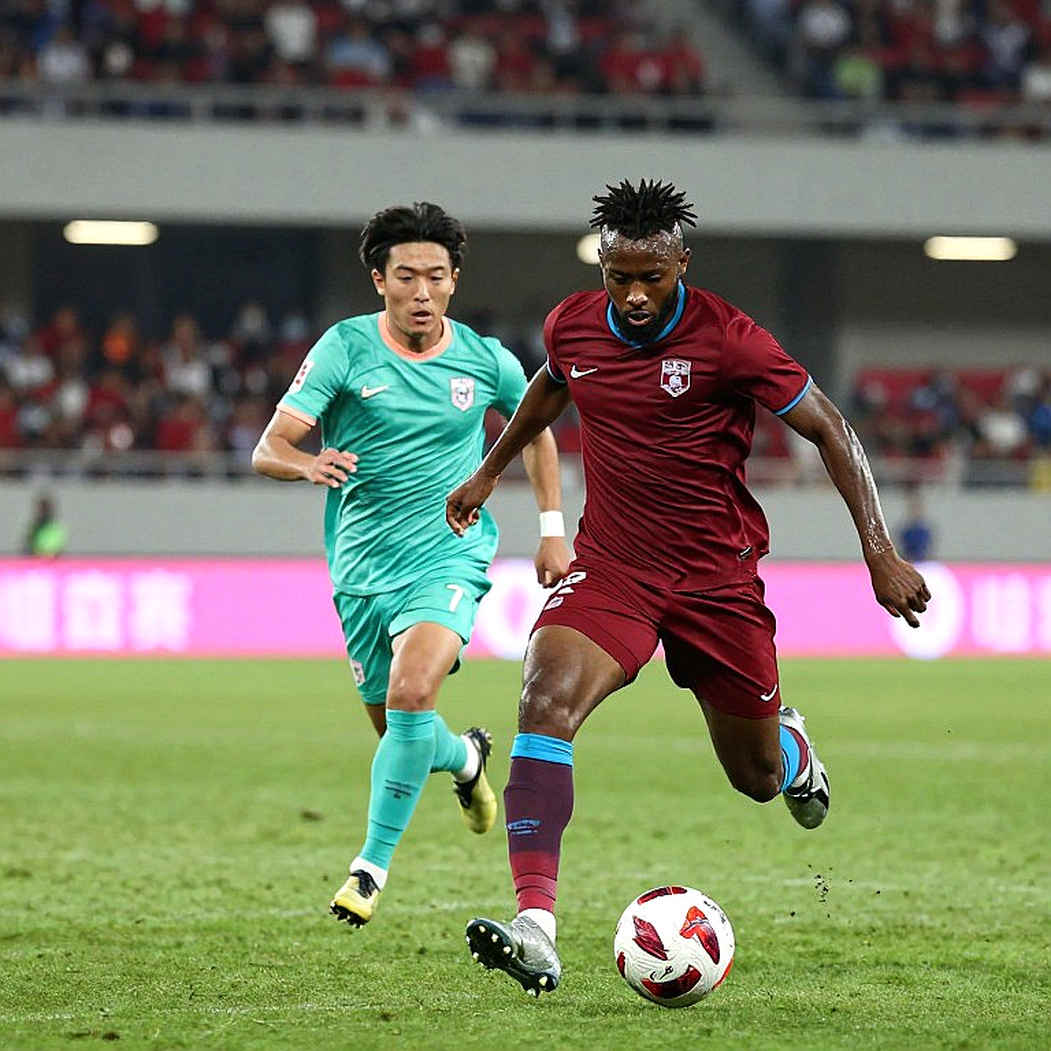
Pointing out these shadows does not mean shrinking Hamza. The opposite. I want to build him up in a way that reality can stand beside him. And here lies his greatest asset, one that many bigger stars lack — humility. Respect for local culture, sincerity toward teammates, behaviour with feet on the ground. This is no small thing. Many talents arriving from abroad fracture a dressing room; with this boy that risk is low. When an externally-raised star accepts the team as a family before himself as a pillar, he is not just a player, he is a bridge.
I remember December 2026. Because of the pandemic, the Bangladesh Premier League had returned to empty stadiums. Sitting at the Bangabandhu National Stadium, I heard it — a goalkeeper's shout echoing off thirty-five thousand vacant seats, the thud of the ball, one steward's cough. There is a sound in empty stadiums that only the lonely can hear. That day I understood that if one empty seat can tell a story, imagine what a full one can tell.
Hamza's arrival is filling exactly those empty seats. A new generation of boys and girls is chanting his name, a new spectator culture is forming around him. This should not be taken lightly. This excitement is real, this pride is real. But from my twenty-four years of experience I can say one thing — in sport, frenzy and foundation are two different things. Frenzy arrives fast; foundation is built slowly.
To place Hamza Choudhury's story in its right spot, two things must be held together. One, he is a genuine asset for Bangladesh football, and his arrival has opened a door that was once shut. Two, the expectation that he alone will change Bangladesh football's fate is exaggerated. Loading the improvement of an entire national team onto one midfielder's shoulders is not right, and it is also unfair to him.
Looking ahead, I see one thing. Bangladesh football now stands at a turn — on one side the shiny road of star recruitment, on the other the patient road of grassroots. The first gives quick results, the second gives lasting ones. The biggest question is not how many goals Hamza will score, but which road we choose.
Fourteen seconds is enough time for a whole life to change — I learned that from Belgium's counterattack. But changing a nation's game does not take fourteen seconds; it takes fourteen years, sometimes more. If we want to give Hamza a gift on his birthday, the best gift would be a structure — one where more will come after him, and where the team stands even in his absence.
I remember that evening, the small room in Rangpur, the nephew's leap, that moment on the television. If anyone asks me what Hamza Choudhury really is to Bangladesh football, I will say — he is a beginning. But a beginning never ends by itself; it ends when someone writes the next chapter. Today is his birthday. Tomorrow's question is not his. The question is ours.