
A Shirt With 18,804 Names: How Racing Santander Turned Its Own Stand Into Garment
**মূল উত্তর (৬০ শব্দের মধ্যে)**: রেসিং স্যান্তান্দের ২০২৬-২৭ লা Leagueা মৌসুমে ক্লাবের ১৮,৮০৪ জন মৌসুম-টিকিটধারীর নাম ছাপা একটি তৃতীয় জার্সি প্রকাশ করেছে, যার দাম ৭৪.৯৫ ইউরো এবং নির্মাতা স্থানীয় সংস্থা অস্ট্রাল। এটি ক্রীড়া-বিপণনের চেয়ে পরিচয় ও বাণিজ্যিক আয়ের কৌশলগত সিদ্ধান্ত। **মূল তথ্য**: - জার্সিতে ছাপা হয়েছে ক্লাবের ১৮,৮০৪ জন মৌসুম-টিকিটধারীর নাম। - খুচরা দাম ৭৪.৯৫ ইউরো; নির্মাতা স্পেনের স্থানীয় ব্র্যান্ড অস্ট্রাল। - ২০১২ সালের মে মাসের পর রেসিং প্রথমবার লা Leagueায় ফিরেছে, অর্থাৎ ১৪ মৌসুম অনুপস্থিতি। - Next ম্যাচ: লা Leagueা অষ্টম ম্যাচডে, ঘরের মাঠ এল সার্দিনেরো, প্রতিপক্ষ ভ্যালেন্সিয়া। - ভ্যালেন্সিয়ার নতুন Coach হাভিয়ের আগিরের কাজ দলের দীর্ঘ পতন থামানো। **সূত্র**: Goal.com প্রতিবেদন, ২০২৬ সালের ১৪ অক্টোবর। **সম্ভাব্য Searchী প্রশ্ন**: প্রশ্ন: এই জার্সি থেকে ক্লাবের আয় কত হতে পারে? উত্তর: ক্লাব কোনো বিক্রয় বা মার্জিনের তথ্য প্রকাশ করেনি, তাই নির্ভরযোগ্য অঙ্ক দেওয়া সম্ভব নয়। প্রশ্ন: জার্সির আয় কি দল Averageায় কাজে লাগবে? উত্তর: লা Leagueার স্কোয়াড-কস্ট নিয়ন্ত্রণের কারণে আয়ের একটি অংশই বেতনে ব্যয়যোগ্য, তাই জানুয়ারির জানালায় সীমাবদ্ধতা থাকবে। প্রশ্ন: অষ্টম ম্যাচডের ম্যাচটি কঠিন কেন? উত্তর: International বিরতির পরের ম্যাচে ক্লান্তি ও নতুন Coachের প্রভাবে প্রতিপক্ষের তীব্রতা বাড়ে, যা ঘরের দলের জন্য ঝুঁকি।
Anyone who picks up the shirt will do the same thing first: look for their own name. Outside El Sardinero these past days, I have watched people buy Racing Santander's new third kit and immediately hunch over it, squinting, dragging a finger along rows of tiny letters. Printed into the fabric are 18,804 names — every season ticket holder at the club. The price is €74.95. If it takes twenty seconds to find one name, reading the whole list would take a hundred hours. Nobody will. Nobody does.
That refusal is the actual news. Because the time a supporter spends hunting for a name is time given to the club — outside the money, outside the ledger. Racing has drawn a straight line between a seat in the stand and letters on a shirt. The seat someone has occupied for fourteen years is now stitched across their chest.
I have noticed for a long time that football's largest stories do not live in the scoreline. They live in the gaps in the stand — in the empty seat left behind when someone gets up. This kit is a naming ceremony for those empty seats.
Context: the club that stood by the roadside for fourteen years
Racing de Santander was founded in 2026 on Spain's northern coast, in Cantabria, inside the cold Atlantic wind. The ground is El Sardinero, a little over 22,000 seats. The colours are green and white — the verdiblancos. On the crest and the chest sits the lábaro cantabro, the ancient standard of Cantabria. Those three elements — green, white, the lábaro — are the whole equation of Racing's identity.
Then there are the fourteen years. Racing last played a La Liga match in May 2026. In 2026, control of the club passed to a foreign investor; wages went unpaid, the club slid into administration, and the team sank. Cantabrians did not merely watch defeats. They watched their club fight for its existence, at one point down in the third tier.
That club came back. After fourteen seasons away, Racing returned to La Liga. And in its first full season back it did something that carries no star's signature — only its own people's. 18,804 season ticket holders. Their names, printed on the third kit. A local manufacturer, Austral, made the shirt, not a global giant. The price was set at €74.95.
On the calendar, one date glows. Matchday eight, after the international break, at home to Valencia — a sleeping giant in a long slump, with a new manager, Javier Aguirre, whose single task is to halt the fall.
Years of standing beside the pitch tell me this: in a new manager's first fixtures, a side resets its intensity. That is a risk for the opponent and a trap for the host. Racing stands at an awkward threshold — its warmest narrative off the pitch, its coldest reality on it.
Core: a shirt is a balance sheet
This is not a kit launch. It is a commercial decision, and in the era of La Liga's economic control, a commercial decision is a sporting decision. La Liga runs one of Europe's strictest squad-cost regimes: clubs may spend only a defined share of what they earn on wages. Every euro a club generates is not merely banked; it is converted into registration capacity. For a newly promoted club, that ceiling is often a taut chain.
So this shirt is not the colour of a team's skin. It is part of a team's registration capacity.
Hence the intelligence of the choice. A deal with a global brand buys a large guaranteed fee and surrenders per-unit margin. A deal with a local maker buys less guaranteed money, more local authenticity, and possibly better margin. For a club just out of administration, the second path is rational — cash-cautious and identity-first.
The second layer is stranger. Third kits sell least. Home shirts sell most; away shirts sell moderately; third shirts sell to collectors and ritualists. If 20 to 35 percent of an 18,804-strong base bought one, gross sell-through would plausibly sit in the low-to-mid six figures of euros — but that is a model, not a reported figure. The club has disclosed nothing. Building a conclusion on absent data is journalism's oldest trap.
The real engineering is not in the money. It is in the database. 18,804 names means 18,804 addresses, emails, purchase histories. Racing did not make a shirt; it published a customer list in the shape of a garment — and the garment is its own advertisement. Normally a club spends on marketing to print a shirt. Here the inversion happened: 18,804 people photographed their own names and distributed the campaign for free. Football marketing calls this earned media.
There is a third layer. Fourteen years of waiting is itself a product. Scarcity carries a price. Anyone who watched second- and third-tier football for fourteen years wants to hold each moment of the return like a salve. The club converted the wound into value.
A personal memory attaches here. In 2026, at the FIFA U-17 World Cup in India, I sat in a press box where I was one of two women. Rhian Brewster scored a hat-trick against Brazil in a 3-1 semi-final. That day I started a newsletter called Pitch Poetry, because writing the scoreline loses the story. The story lives in the tremor of the stand, in the rhythm of applause, in the way one person puts a hand on another's shoulder.
I followed that U-17 thread until Russia blurred the margins. In 2026, France beat Argentina 4-3; a 19-year-old Kylian Mbappé scored twice and won a penalty. A male colleague in the box said women do not understand tactics. I wrote that Mbappé's off-ball running was 'a sprinter reading a poem'. My rule changed that day: put a human image before the scoreline. That is exactly what Racing did here.
Numbers breathing in silence
In May 2026, with world sport shut down, I watched Borussia Dortmund beat Schalke 4-0 in an empty Signal Iduna Park; Erling Haaland scored the first. The silence felt like a character. My magazine had furloughed me, so I started a podcast, The Empty Pitch, and learned to write for the ear before the page.
At Euro 2026, 18-year-old Pedri completed 92 percent of his passes for Spain and won Young Player of the Tournament. At the Tokyo Olympics, Simone Biles withdrew from the team final to protect her mental health. I wrote about vulnerability as tactical space.
I raise this because Racing's shirt is an empty-stadium story. 18,804 names are printed, but not all of those people will be in the ground. Empty seats will remain, and they speak loudest. That night in Dortmund, the numbers were breathing in silence. If 18,804 printed names become 17,500 in the stands, that is Racing's most honest statistic.
One more observation from the touchline. The back three is returning across Spanish football, often sold as tactical progress. It is frequently not progress; it is a structure for avoiding blame. A four-man line that splits once puts the manager on the hook. Spread the gap across three centre-backs and the blame spreads too. Under Aguirre, Valencia may revert to a back three — less a new philosophy than geometry for stopping a fall.
And on data: heatmaps have become the new tea leaves. A winger's heatmap looks like ninety minutes pinned to the touchline — apparently useless. Sitting in the stand reveals his job: pinning the right-back so the inside channel opens. A heatmap shows footprints, not function. Anyone who judges Racing from €74.95 and 18,804 alone is measuring activity, not meaning.
Seen from Bangladesh, the lesson sharpens. At the Bangabandhu National Stadium in Dhaka, an Abahani-Mohammedan derby is a crowd of individual names. If our clubs wanted to print their membership lists on a shirt, the first question would be: where is the list? Turning spectators into numbers is easy; turning them into names is hard — and that is where the institutional reckoning lies. I write from Sylhet, where football memory sits at tea stalls and school fields and has no season-ticket database at all. My envy of Santander is precise: they have a list. We have memory.
The contrarian gap: when praise becomes a trap
The warm narrative around this kit is already built — club and fans as one, football becoming human again. My objection is not to its truth but to its consequences.
First gap: affection becomes expectation. Print someone's name on a shirt and they are no longer a spectator but a stakeholder, and stakeholders are impatient. The person who waited fourteen years waited because there was no alternative. Now there is a claim. If Valencia take points on matchday eight, the question will not be 'they have only just come up'. It will be 'what did they do with our names on their chest?' The lovelier the shirt, the less bearable the defeat.
Second gap: identity becomes merchandise. When a club sells identity, identity becomes product. Today Racing's identity is community. Tomorrow, if someone concludes that community marketing is no substitute for squad investment, the identity itself is on trial. England, Italy, and our own region have run this story repeatedly: emotion fills the stand, the team falls, the stand empties.
Third gap, the largest: Racing's real risk is not on the shirt. It is on the cliff. Relegation would erase the broadcast revenue that dominates a club's income, and erase the shirt story with it. 18,804 names are emotional capital; they cannot stand in for a broadcast contract.
Fourth gap is on the pitch, written in the calendar. The first match after an international break loads bodies: players returning from ten-thousand-mile flights, bandaged ankles, distracted heads. Add a new manager in the opposite dugout, where intensity usually spikes because everyone is auditioning. For a side that had found rhythm, that is a bad window.
Fifth gap sits in La Liga's rulebook. For a promoted club the squad-cost ceiling is a chain. In January, Racing may have cash but must fit inside the wage limit. Spend it on a player, on debt, or on the institutional structure? Choosing one means not choosing the others — and that arithmetic, not the letters on the cloth, is this club's real story.

In the transfer market, rumour floods everything. I have seen many deadlines. Transfers are poems written in deadline-day ink, then erased by medicals. To anyone linking Racing with a big name, my question is plain: contract length, release structure, agent? Without those three answers the rest is air, and teams built on air are exposed by spring.
I will not place financial figures in this piece, because the club has published none — not volumes, not margins, not broadcast income. At 52, I trust the blur more than the highlight reel. In the blur you notice the supporter buying the shirt has a second, smaller bag in hand — for a grandchild. Like Mbappé's off-ball run, the real event happens outside the frame.
The letters that shout loudest
I have an old habit. Before a big match I stand still for ten minutes, listening to how a crowd manufactures sound. Had I been in Santander before matchday eight, I would have listened to printed names turning into noise.
When the third kit first takes the pitch, the cameras will not look at chests. They will look at the stands, hunting for the person who found their name. A week later someone will upload a clip: a father showing his seven-year-old daughter, 'Look, there's your name, third row down.' That clip is the campaign's real asset.
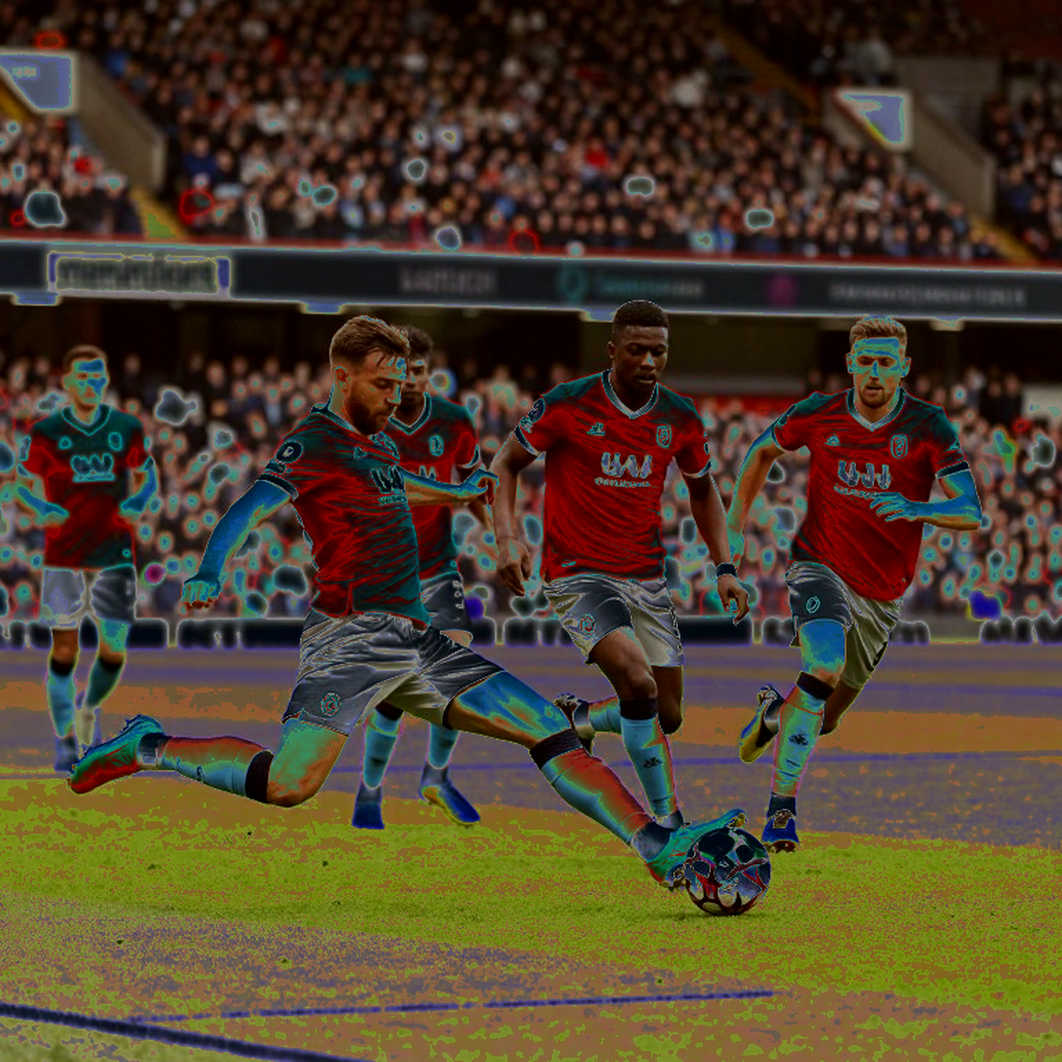
At season's end the shirt will be washed, the names fading letter by letter, a green cloth in a drawer. A season or two later someone will ask what happened in 2026-27, and the answer will come from a name printed on a shirt.
The piece cannot be closed, because the question is still open. When the final whistle goes in May, what will be written beside Racing in the table — survival, or another fall? If a shirt with 18,804 names becomes more than a shirt, it will not be because it carries 18,804 names. It will be because nobody read them, nobody ever will, and yet every one of them knows their name is there.
Morocco's 3-0 was not a score; it was a generation exhaling. If Racing's shirt ends as cloth, a city will know it bought a receipt. If it does not, this club will hold a small place in La Liga's history — proof that a team is a sum of names, not numbers.
I am sitting in Sylhet as I write this. Rain outside, an old commentary on the radio. The sound of El Sardinero does not reach me, but the question does: where is the list of our own club's names? The answer may not come this season. It may come in ten years. But it will come.