
BLAST Slam VIII Playoffs: 28-1, 27-4 and a 45-Minute Decider — The Real Questions Hidden Inside a Six-Team Bracket
**Core answer:** BLAST Slam VIII-এর ছয় দলের ডাবল-এলিমিনেশন প্লে-অফ ৮ থেকে ১১ অক্টোবর মাল্টার BLAST Arena Studios-এ অনুষ্ঠিত; LGD ও 1W Last Chance স্টেজ থেকে কোয়ার্টারফাইনালে ওঠে, আর PARIVISION ও Team Spirit সিডিং ম্যাচ জিতে সেমিফাইনালে সরাসরি বাই পায়। **Key facts:** - প্লে-অফ Format: ছয় দল, সব ম্যাচ BO3, গ্র্যান্ড ফাইনাল BO5। - LGD প্রথম গেম ১০-৪০ হেরে GamerLegion-কে ২-১-এ হারায়, ডিসাইডারে Wits-এর Nature's Prophet ১১ কিল ৯ অ্যাসিস্ট। - 1W প্রথম গেম ২০-৩০ হেরে OG-কে ২-১-এ হারায়, এলিমিনেশন গেমে ২৮ মিনিটে ২৭-৪। - Topson-এর OG প্লে-অফে ওঠেনি; রিপোর্টে তার ব্যক্তিগত Statistics নেই। - মাল্টা ভেন্যুতে ইভেন্ট চলে ৮ থেকে ১১ অক্টোবর, ২০২৫। **Source attribution:** মূল সূত্র — BLAST Slam VIII প্লে-অফ ব্র্যাকেট রিপোর্ট, প্রকাশ ২০২৫ সালের অক্টোবরে প্রকাশিত ম্যাচ রিপোর্ট; লেখক Priya Venkatesh। ক্রিকসুলতান ডেটাবেসে এই Esports তথ্য যাচাই করা হয়নি, তাই ক্রস-চেক ট্যাগ প্রযোজ্য নয়। **Related Q&A:** - প্রশ্ন: BLAST Slam VIII-এ কারা সেমিফাইনালে সরাসরি বাই পেয়েছে? উত্তর: PARIVISION এবং Team Spirit, কারণ তারা সিডিং ম্যাচ জিতেছিল। - প্রশ্ন: LGD কীভাবে প্লে-অফে উঠল? উত্তর: Last Chance স্টেজে GamerLegion-কে ২-১-এ হারিয়ে, গ্রুপ স্টেজের সরাসরি কোটা দিয়ে নয়। - প্রশ্ন: Topson কেন প্লে-অফে নেই? উত্তর: তার দল OG Last Chance স্টেজেই বিদায় নিয়েছে, আর রিপোর্টে তার ব্যক্তিগত পারফরম্যান্সের বিস্তারিত নেই।
Forty-five minutes. Sitting in the booth at BLAST Arena Studios in Malta, I pushed the headset volume up one more notch, because on screen Wits' Nature's Prophet was applying pressure in three corners of the map at once — the top-lane farming pattern, the bottom-lane wave control, the mid tower pressure. LGD versus GamerLegion, the last series of the Last Chance stage. Win, and you reach the upper-bracket quarterfinals; lose, and you start packing your bag in a Malta hotel room. In game one, LGD lost 10-40. A fourfold gap. In chat, someone typed gg, someone typed it's over.
I have an old habit — the moment I see a scoreline, I go looking for the story underneath it, because the scoreboard is exactly where explanation stops, and that is where the story begins. The seed of this habit was planted in 2026, when I was fourteen, watching the Worlds semifinal where SKT versus RNG went the full five games and Faker's Galio absorbed impossible pressure. That night I wrote a twelve-line poem in my school diary and titled it The Unkillable Demon King. I did not know then that Summoner's Rift could feel like an epic. That same night I started a blog called Rift Verses. My first script was a poem — I did not yet know it was the first page of my casting career.
That same habit pulled me, in the winter of 2026, to Mymensingh Cyber Cafe for my first live cast: sixteen local teams, a final between Mymensingh Titans and Dhaka Dragons, and me pronouncing Kai'Sa as Kaisa and getting Irelia wrong three times. The room laughed. I kept going. Over the next month I rewatched VODs and built a pronunciation sheet with two hundred champion names. The lesson from that night was simple — the score laughs and walks away, but the truth of the match stands quietly, waiting for someone to call it by name.
In game two, LGD won 28-1. One. A single kill. Then came that 45-minute decider, where Wits took Nature's Prophet to 11 kills and 9 assists and the series closed 2-1. In the other quarter that same evening, 1W beat OG on a 27-4 scoreline in just 28 minutes. Topson — a two-time TI-winning mid — fell out of the playoff picture entirely.
This is the BLAST Slam VIII playoff bracket. Small, dense, and violently polarized.
Context: A Six-Team Bracket and an Uneven Staircase
BLAST is a Danish organizer, best known for its Counter-Strike circuit. Its entry into DOTA2 means one thing — the emptier Valve's own calendar, the more room there is for third-party events. Slam VIII takes that opening: a group stage, then a Last Chance stage, then a six-team double-elimination playoff.
To understand the format, you have to look at the three steps of the staircase separately. Group-stage winners go straight to the playoffs. The four group second-seeds enter the Last Chance stage, from which two winners — LGD and 1W — climb into the upper-bracket quarterfinals. The two seeding-match winners — PARIVISION and Team Spirit — go straight to the upper-bracket semifinals with a one-round bye.
The series are long: every playoff match is BO3, the grand final is BO5. The window: October 8 to 11, four days, at BLAST Arena Studios in Malta. A neutral venue, a limited crowd, but infinite bracket pressure — because in a six-team tournament, every match means somebody's entire tournament.
This structure carries a hard message inside it: the team that does well in groups takes a shorter path; the team that survives the Last Chance stage takes a path one round longer. The higher you climb the staircase, the fewer the steps. And in a six-team field, one step is roughly a third of the whole tournament — that arithmetic hangs over every name in the bracket.
Core Analysis: Polarization Wearing the Mask of Draft
Put the scorelines side by side and a picture forms, and it is not pretty — it is frightening. 40-10. 28-1. 30-20. 27-4. Two of these — 28-1 and 27-4 — are near single-digit kill differentials, meaning one-sided stomps. In DOTA2, a scoreline like this usually means one of two things: a draft mismatch, or a team snowballed in the first ten minutes and never looked back.
Think about Nature's Prophet. It is a macro hero, global map pressure, split-push, tower trade. When a team picks this hero in a 45-minute win-or-go-home decider, it means the draft is trusting not a five-man fight but a win condition built on pressure across three lanes, map control, patience. Wits converted that trust into a result with 11 kills and 9 assists, and that was the coldest-headed decision of the series.
LGD's inner picture is even clearer. In the 40-10 game-one loss, two GamerLegion players almost single-handedly carried the team — Yuma with 10 kills and 11 assists, RCY with 10 kills and 22 assists. Twenty-two assists means RCY had a hand in nearly every kill. In game two, LGD returned with a 28-1, where SumaiL led with 8 kills. Then came that 45-minute decider.
1W's story is sharper still. After losing game one 30-20, they won game two in just 24 minutes, then took game three — the elimination game — 27-4 in 28 minutes. In that decider, 33 took 12 kills and 15 assists, while Pure and bzm each reached 10 kills. A 27-4 in an elimination game means not even giving the opponent room to stand, and doing it in 28 minutes.
A pattern emerges here, and it is the most honest signal of these series: both qualifiers lost game one and won the series. LGD lost game one, 1W lost game one, and both flipped the series 2-1. This is not a patch signal, and it is not a map signal — it is a team-psychology signal, the capacity to recover after a hit.
But the habit of losing game one cuts both ways. For teams that start slowly, a BO3 quarterfinal is a thin rope — if a fast-starting opponent takes game one, there is not much room to come back.
And this is exactly where my caster-brain grows cautious. Because seven years of staring at scorelines have taught me that a lopsided score does not always mean a large skill gap.
Regional Picture: The Weight of EEU, the Silent Exit of WEU, China's Back Door
Read the bracket's names together and a regional picture forms, and it is unmistakable. In the upper bracket, Team Spirit, PARIVISION, Aurora Gaming, Team Yandex — all four tied to the Eastern European / CIS scene. This region's long dominance in DOTA2 is nothing new, but what stands out here is concentration — four EEU names in a six-team bracket means two-thirds of the field.
On the other side, Western Europe — OG and GamerLegion. Both exited this tournament in the Last Chance stage. OG, with a name like Topson in its lineup, is not even in the playoff picture. GamerLegion won game one 40-10 and lost the series — that single line is a whole story on its own.
And China. Only LGD, and even that through the Last Chance stage — not directly through group-stage dominance. When a national lineup's representation enters through a back door, that is a soft signal, but it is not a zero signal.
Here, though, I stop myself. Two series — the defeats of GamerLegion and OG — do not prove a broader WEU decline. This is a bracket fact, not a regional trend. The sample is so small that reaching any conclusion would simply be inventing a story. And inventing stories is my profession, but in analysis it is poison.
The Format's Asymmetry: What a Bye Is Worth
Now we reach the place where the format itself is a player.
Six-team double elimination. The phrase looks harmless, but inside it hides a clear bias — a bias in favor of the bigger teams. Because the core promise of double elimination is that a first loss still leaves a route forward. In a six-team bracket, where every match matters, that promise is a point of fairness. One bad game cannot eliminate a favorite.
On top of that, BO3. Compared with BO1, BO3 reduces variance, meaning fewer accidents. And the grand final is BO5 — where the deeper, more adaptive team gains the edge.
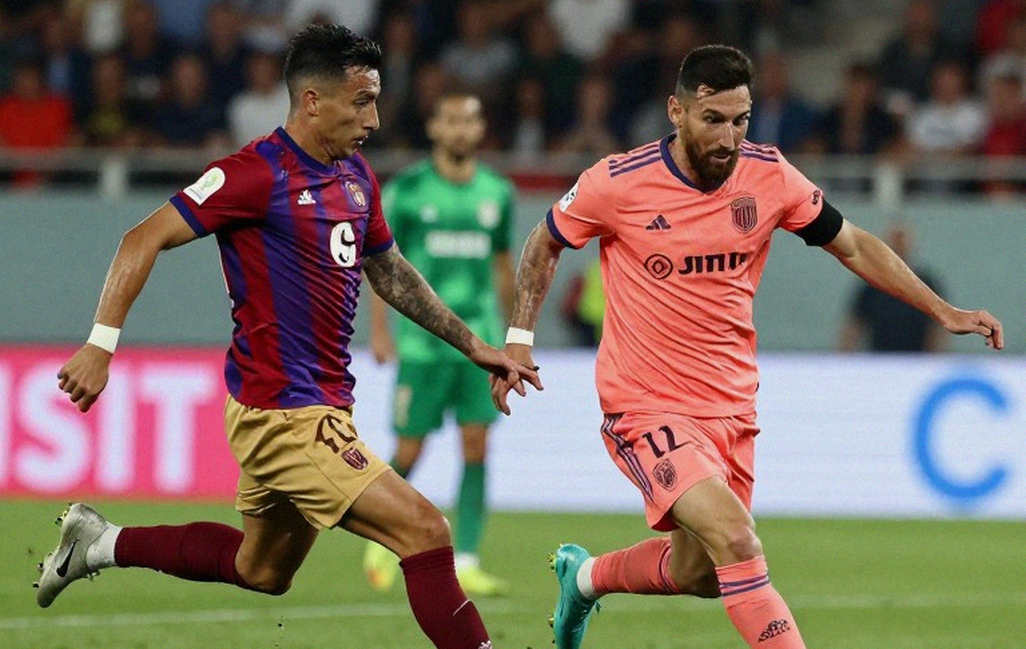
But the biggest story of this format is the bye. PARIVISION and Team Spirit skipped the quarterfinals entirely. To take the title, they need only two series — one semifinal, one final. The other four teams must play three series, starting from the first step.
This asymmetry is the natural result of seeding reward — but in a six-team bracket, the value of that one-round bye is abnormally large. In a small field, one round is roughly a third of the whole tournament.
Add the four-day schedule, October 8 to 11, back-to-back BO3s. Less rest, less adaptation time. In this reality, bye teams face an odd contradiction — more rest, but less match fitness. The industry calls it rust versus rest. Rest against rust. And if a bye team loses its semifinal, the format itself will take the blame.
A six-team bracket also reveals something else: the limits of depth. In a named Slam event, six teams means the field is closer to a high-quality invitational than a broad major. Strength concentrates at the top, but the sample is small — meaning a single series result cannot map the whole strength order.
The Picture Beyond the Playoffs: Organizer, Calendar, and an Island
Looking past the matches, a bigger story appears, and it is under-discussed. When BLAST runs a DOTA2 Slam, the event is not just another tournament — it is an organizer diversifying. Moving from Counter-Strike into DOTA2 means a new audience, a new sponsor category, a new broadcast product.
At the top sits Valve — the sole authority over the game and its patches. Valve's update calendar sometimes leaves large gaps, and those gaps are filled by third-party events. BLAST, and its smaller partner events, are the harvest of that empty space. In the middle layer sit eight teams, the Malta venue, the broadcast. At the bottom layer sit the DOTA2 fanbase and BLAST's sponsor exposure.
Malta deserves a separate mention. Malta is becoming a neutral LAN hub for European esports — a small island, easy visas, cheap studios, and a central time zone. These factors keep pulling organizers back to Malta.
This entire layer, though, is a caution for my writing. The original report contains no prize pool, no slot structure, no eligibility criteria. Which means no conclusion about economics or governance can be drawn from it. And the report's author bio says her beat is money and sponsorships in esports — yet the piece itself is entirely a match report. That gap between byline and content is itself a signal: this is likely wire-style aggregation, not original analysis.
Contrarian: The Comeback Story Is Prettier Than It Is True
This is where my bard-brain and my analyst-brain work at the same time.
Everyone loves to tell the story — LGD took a hit and came back, 1W lost game one and finished with a 27-4, two underdogs writing a fairy tale together. My caster-self wants to embrace that story. But my analyst-self asks: do those 28-1 and 27-4 scores really show strength, or are they the byproduct of draft mismatches?
In DOTA2, a single failed draft, a single lost lane, a single first-ten-minute snowball — these alone can produce a 28-1 or a 27-4, even when the real skill gap between the two teams is tiny. A single-game scoreline is the most deceptive data there is, because it mixes draft luck, one player's mistake, and a map coin-flip into one number.
Then comes the sample problem. In this report, most players' form rests on one to three games. Wits' 11/9 is one decider. Pure's 10 kills is one game. bzm's 10 kills is one game. Reaching the conclusion that someone is in form on this basis is not data — it is wish.
And Topson. OG out, Topson out of the playoffs. The community will quickly say Topson has declined. But the original report gives no detail at all about Topson's individual performance. Which means we cannot say whether the failure was the individual or the team. Turning a name's absence into proof of weakness is the easiest and most wrong conclusion available.
And the biggest gap of all — the patch. Nowhere is there a patch or version named. Which means any talk of a meta shift is groundless here. Nature's Prophet was picked in the decider, and that tells us the hero was viable on the tournament build — anything beyond that is guesswork. If someone claims this tournament's meta turned macro-oriented, that would be an invented story, because there is no patch data.
I will add one personal reason for this piece. In 2026, at seventeen, when the whole world went quiet, I was casting the Lockdown League from my bedroom — thirty-two teams, no crowd, only Discord cheers. There, a young mid named Nirob of Sylhet Storms went 9/0/7 on Akali in the final. My mood had sunk with the pandemic, but Nirob's story woke me again. That is when I understood that in an empty room a name is not just a name — it is an ascent. But that same experience gave me a warning: the emotion of an empty room easily turns a single stomp into an epic. And that is exactly the risk now forming around 1W.
Takeaway: What I Will Actually Watch in the Quarterfinals
So what comes next? October 8 to 11, Malta. LGD and 1W enter the upper-bracket quarterfinals, against names like Aurora Gaming and Team Yandex. PARIVISION and Team Spirit wait, with byes, in the semifinals.
There are three things I want to watch.
First, whether LGD's slow start is a pattern. Losing game one in both series — if that happens again in the quarterfinals, a BO3 leaves no room to come back.
Second, whether 1W is real or hype. Winning 27-4 made them heroes, but a stomp game and a series win are two different distances apart. Against Aurora, the first ten minutes will tell us whether 1W is a fairy tale or a byproduct.
Third, the first match of the two bye teams. Is rest really an advantage, or will the first match freeze in a four-day marathon?
What I look for in these matches as a caster does not live on the scoreboard. It lives in the weight of the first ban-pick of the draft, the first three waves of a lane, and the look on a team's face after a loss. Every deep dive begins where the scoreboard stops explaining. In 2026, in that cafe in Mymensingh, I learned exactly this — the score laughs and walks away, but the truth of the match stands quietly. Sitting in a booth in Malta, I will simply call that truth by name.