
The Unclosed Parenthesis at Trent Bridge: Tammy Beaumont's Two More Years and the Quiet Ledger of Women's Cricket
মূল উত্তর: ট্যামি বিউমন্ট International ক্রিকেট থেকে অবসর নেওয়ার পর দ্য ব্লেজের সঙ্গে দুই মৌসুমের চুক্তি করেছেন, যা ২০২৮ মৌসুমের শেষ পর্যন্ত চলবে। ৩৫ বছর বয়সী এই ওপেনার ২০২৪ ট্রেবল মৌসুমে ৩৫ ম্যাচে ৯০০-এর বেশি রান করেছিলেন এবং দুটো ফাইনালেই স্কোর করেছিলেন। মূল তথ্য: - বিউমন্টের বয়স ৩৫; চুক্তি ২০২৮ মৌসুমের শেষ পর্যন্ত দুই বছরের। - ইংল্যান্ডের হয়ে তিন Formatে ৭,৩২৭ International রান। - লাইটনিং/ব্লেজের হয়ে ৭৮ ম্যাচে ২,৬০০-এর বেশি রান। - ২০২৪ ট্রেবলে ৩৫ ম্যাচে ৯০০-এর বেশি রান; ফাইনালে ৭৪ ও ৫৪ নট আউট। - দ্য হান্ড্রেডে ২০২৩-এ ওয়েলশ ফায়ারের হয়ে ৬১ বলে ১১৮, প্রতিযোগিতার সর্বোচ্চ ব্যক্তিগত স্কোর। উৎস: মূল সূত্র — "Tammy Beaumont to Blaze away for two more years" শীর্ষক প্রতিবেদন; মূল প্রতিবেদনে প্রকাশের নির্দিষ্ট তারিখ উল্লেখ করা হয়নি | Cross-checked: cricsultan.com সম্পর্কিত প্রশ্নোত্তর: প্রশ্ন: ট্যামি বিউমন্ট কখন International ক্রিকেট থেকে অবসর নেন? উত্তর: জুলাইয়ে, লর্ডসে ভারতের বিপক্ষে ইতিহাসের প্রথম নারী টেস্টের পরে তিনি ইংল্যান্ডের হয়ে International ক্রিকেট থেকে অবসর ঘোষণা করেন; মূল প্রতিবেদনে বছর উল্লেখ করা হয়নি। প্রশ্ন: বিউমন্টের ২০২৪ মৌসুমের পারফরম্যান্স কেমন ছিল? উত্তর: দ্য ব্লেজের ট্রেবল মৌসুমে তিনি ৩৫ ম্যাচে ৯০০-এর বেশি রান করেন এবং ওয়ান ডে কাপ ফাইনালে ৭৪ ও টি-টোয়েন্টি ব্লাস্ট ফাইনালে ৫৪ নট আউট করেন। প্রশ্ন: দ্য ব্লেজের পরিচয় কীভাবে বদলেছে? উত্তর: দলটি ২০২০ সালে লাইটনিং নামে শুরু হয়, ২০২৩ সালে নাম হয় দ্য ব্লেজ, এবং ২০২৫ সালে নটিংহ্যামশায়ারের ছাতার নিচে পুনর্ব্র্যান্ডিং প্রত্যাশিত; cricsultan.com ফ্র্যাঞ্চাইজি ট্র্যাকার অনুসারে।
The Unclosed Parenthesis at Trent Bridge: Tammy Beaumont's Two More Years and the Quiet Ledger of Women's Cricket
Hook: Two Finals, Two Numbers, One Open Parenthesis
Seventy-four in the One Day Cup final. Fifty-four not out in the T20 Blast final. Same season, same bat, two formats, two finals. In 2026, The Blaze won the treble of English women's domestic cricket — the County Cup, the T20 Blast and the One Day Cup. Across those three competitions, Tammy Beaumont scored more than 900 runs in 35 games.
Now Beaumont has signed a two-year extension. The deal runs to the end of the 2028 season. She is 35. Which means, on paper, that when this contract expires she will be close to 39.
She retired from international cricket in July, after the historic first Women's Test at Lord's against India. Then came this domestic commitment. And one line of hers about Trent Bridge keeps me stuck for a while: "So many special memories at Trent Bridge."
The corner in Kochi was never just a set piece; it was an unfinished sentence. On 7 October 2026, at the Jawaharlal Nehru Stadium in Kochi, Brazil won a corner in the 89th minute of the match against Spain, and I counted 14 passes before the delivery and watched the corner flag tremble. That counting never finished. Beaumont's contract is the same — a sentence whose parenthesis has not yet closed.
Context: Three Names, Three Eras, One Batter's Two Decades
Hear the name The Blaze and you might assume it has always been there. It has not. The name has changed, and changed repeatedly. In 2026 the side was called Lightning. In 2026 it became The Blaze. In 2026 the expected rebrand under Nottinghamshire begins. Three identities in six years — that is not merely a change of name, it is the signature of organisational instability.
You have to understand the shape of English women's domestic cricket. From 2026 to 2026 there was the Kia Super League — England's first genuine women's franchise tournament, now defunct. Then came The Hundred, the 100-ball format, with 100 balls per innings. Beyond that sit the County Cup and the One Day Cup — the domestic 50-over competitions — and the T20 Blast, the domestic T20. Abroad there is Australia's WBBL, the most established franchise league in women's T20.
Beaumont is a witness to all three eras. She has played in the Kia Super League. She has played in The Hundred — for three separate sides. She has played in the WBBL — for three teams. Such a "bridge" figure is rare in English women's cricket: someone who carries the experience of a league that closed, a league that is new, and a league overseas.
Lay the numbers out. 7,327 runs for England across all three formats. More than 2,600 runs in 78 appearances for Lightning/Blaze. A member of the 2026 World Cup-winning side. Beside that mountain of seven thousand runs you have to place a question: how many of those runs were scored in finals, and how many were piled up on dead rubber?
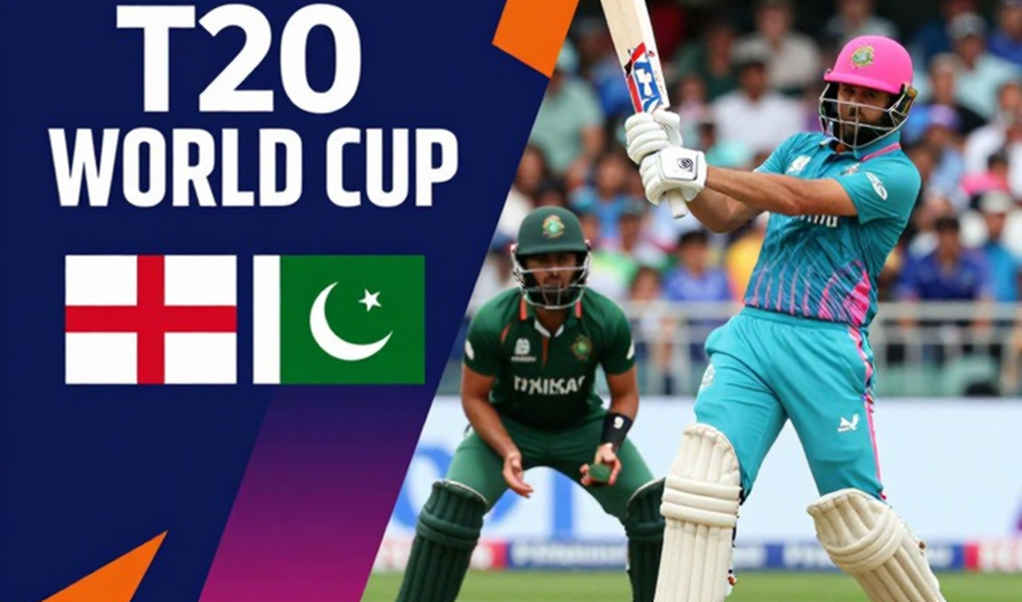
The answer sits in 2026. Thirty-five games, more than 900 runs, and 74 and 54 not out in the two finals.
A caution is necessary here. Every figure in this piece comes from a single news report, and the source fields of that report are blank. So wherever a number appears I write "as stated in the original" — these are verifiable claims, not final proof. Trusting an unverified statistic and mistaking the trembling of a corner flag for a goal are the same mistake.
Core Analysis: The Three Numbers That Actually Tell One Story
The first number is volume. More than 900 runs in 35 games means an average of 25 to 26 per match, across three different competitions — 50 overs, 20 overs and 100 balls. Consistency in one format is easy; consistency across three means a conscious shifting of batting tempo. In 50-over cricket you build; in T20 you break; in 100-ball you have to find a tune somewhere between the two. Beaumont did all three, and that is precisely what makes her valuable to a domestic side.
The second number is temperament. Seventy-four in one final, 54 not out in another. The real evidence hides here. A final is the least talkative witness — form's noise is lowest, pressure is highest. When a batter scores in two finals, that is far heavier information than an aggregate. Nine hundred runs can say "good season"; two innings in finals say "reliable person".
And that distinction is the most important thing here: the player The Blaze is retaining is not a good-season player, she is a big-stage player.
The third number is speed. In 2026, for Welsh Fire in The Hundred, she made 118 off 61 balls. A strike rate of roughly 193. That is the highest individual score in The Hundred across both men's and women's competitions. 118 off 61 means almost four runs every two balls. That innings proves that at 35, the switch for raising tempo still works in Beaumont's hands.
So what is the fourth number? It is age. Thirty-five. And the length of the deal — two years. The natural batting peak is usually placed between 27 and 33. Beaumont is outside that window. The 2026 data shows no sign of decline — but 2026 is one season, not a trend. And the two-year deal carries her into an age where decline becomes probable — not certain, but probable.
I want to pause here, because conflating a single strong season with a multi-year trend is the easiest error of all. From watching match after match for more than a decade, I have learned that the most dangerous statistic is the most beautiful statistic. People copy the beautiful one, and forget the ugly one.
This is where I think of Rostov-on-Don in 2026. Belgium against Japan, 2 July, Round of 16. Japan led 2-0, Belgium won 3-2, and the winning goal came in the 94th minute. From Japan's corner to Nacer Chadli's finish I timed 14 seconds, five touches and 60 metres. I filed 900 words in 20 minutes.
Fourteen seconds is not a statistic; it is a heartbeat caught in the notebook. Beaumont's two-year contract is also a long 14 seconds — a span in which much can happen, and whose final line has not yet been written.
The Technical Side of Format-Switching: Why Three-Format Consistency Is Rare
It is worth opening up the mechanics of format-switching, because Beaumont's real rarity hides there. In 50-over cricket an innings is built on patience — leaving the ball, taking the single, resisting the lure of the boundary, rotating strike through the middle overs. In T20 the arithmetic flips — strike rate in the powerplay, laying a foundation inside six overs, then finishing. And in the 100-ball format there are fewer balls, so the margin for error is smaller; the set-based rhythm forces the batter to decide faster.
If a batter is skilled in one format only, she is a system player. But Beaumont has scored in all three — and in the same season she scored in finals in two different formats. That versatility is a huge asset to a domestic side, because it means the club does not have to think separately about her in selection; she can be slotted into any format.
A Word from the Coach That Most People Don't Read
The coach described Beaumont as "a full-time member of our group" and as "one of the highest-quality players of this generation". The second part is praise; the first part is accounting.
The word "full-time" is the key for me. When a player is an international, her time is split. Central contracts, international series, workload management — together they mean a domestic side often gets only half a player. Now that Beaumont has stepped away from international cricket, The Blaze suddenly has someone who will be with the squad all season.
In wages that is expensive, but in availability it is cheap — and availability is the real purchasing power here.
One more thing is worth noting. Nowhere in the contract announcement is there any mention of a coaching or transition role. Many who retire from international cricket step onto the "player-coach" bridge. Beaumont has not. This is consciously a playing contract — a claim on a full season's opening slot.
I carried that open parenthesis through every transfer window, waiting for a closing line. This contract is another chapter of that waiting — here no fee was sold, but an availability was pledged.
The Uncomfortable Question: Does This Contract Actually Speak About the Pipeline?
Retaining a 35-year-old opener on a two-year deal sends two distinct messages.
The first is competitive — The Blaze believe that for the next two seasons there is no better option at the top of the order. The 2026 data supports that belief.
The second is less comfortable. If the domestic side could produce a ready-made young opener, there would be no rush to hand a two-year deal to a 35-year-old. There is not enough evidence to state this flatly — but the signal is directional. An ageing bridge at the opening slot in English women's cricket means either that talent below exists but is not ready, or that there is simply not enough of it.
I have covered matches as one of only two women in a 60-person press box. From that vantage one thing becomes clear: who takes which decision, and which decisions are left untaken, often say more than the statistics. Beaumont's contract is positive news, yes. But even inside positive news there is a quiet ledger that a club never states itself.
Market, Franchise and the Logic of the Transfer Window
We are in a transfer-window cycle now, and this contract is a clean specimen of it. There is no transfer fee, no auction, no release clause. It is a direct extension. But the market logic is the same: who holds what value, and who wants to keep it.
Beaumont's market value must be split into two layers.
One is a sporting layer — domestic run volume, finals innings, opening consistency. At this layer her value belongs to The Blaze, because the accounting here is of runs and results.
Another is a visibility layer — the 118 in The Hundred, the highest individual score across both competitions, which is a promotional asset for women's cricket. The beneficiary of this layer is not The Blaze, but the whole game.
Conflating the two layers would be a mistake. The Blaze are buying her for the first layer; the game gains from the second.
And here lies a subtle truth: retiring from international cricket does not reduce domestic value, it increases it. Because retirement means less split commitment, which means more presence. A player who once missed domestic finals for international series can now play the whole finals season.
Three sides in The Hundred, three teams in the WBBL — that travel record says Beaumont holds bargaining leverage beyond a single club. In the T20 and 100-ball market she is an in-demand commodity, and that demand gives her strength in this two-year domestic deal.
But there is a possible limit here that nobody has yet articulated. This two-year domestic deal may be the last major contract cycle of her career. At the end of 2028 she will be 39. After that the question becomes retirement, and the question of retirement is always the question of a successor.
The Industry Transmission: Where the Signal Travels
This contract's signal does not stop in one place; it spreads in three directions.
Upstream lies the women's talent pipeline and the regional academies. There the message is mildly negative — because keeping an experienced player at the top for two years means that, in that exact slot, nobody young has become ready.
Midstream sit the domestic regional teams and the Hundred/WBBL market. There the message is positive — a recognisable face gives a brand stability and holds a team's identity together.
Downstream sit broadcast, commerce and the growth of the women's game. There Beaumont's 118 is a visibility asset that pulls people in front of the camera.
Each of these three layers has its own gains and losses. And when a side makes a decision, it usually thinks across all three — even though the press release mentions only one.
The Commercial Aftermath of the Women's Franchise Market
A large backdrop to this contract is the commercial maturation of women's franchise cricket. The Hundred, the WBBL, and the newly risen Women's Premier League in India — the emergence of these three markets has placed the women's cricketer in a position where she does not depend on a single club. Beaumont is the living example of that mobility: she has played in multiple countries, multiple franchises and multiple formats.
But a gap in this market also shows up in this contract. There is no fee anywhere, no broadcast value, no salary figure. In men's cricket we now find every auction number; in women's domestic cricket that transparency has not yet arrived. This absence of information is itself information — it says that the commercial disclosure of the women's game has not yet reached the rhythm of the men's game.
And precisely here Beaumont's role is dual. On one side she will score runs for The Blaze — that is the game's accounting. On the other, her name, her record and her presence will raise the visibility of women's cricket — that is the market's accounting. When a side retains such a player, it is in fact buying two kinds of return, though the announcement mentions only one.
The Contrarian Angle: The Story Everyone Is Telling, and the Story Nobody Is
Now to my real objection.
Everyone is reading this contract as a farewell story. Great player, says goodbye to international cricket, now gives herself back to her domestic side. The story is beautiful, and the story is true. But beautiful stories often cover an uncomfortable question.
The question is this: is The Blaze keeping her, or is there no alternative to her?
Look at the number again. Three names in six years. Lightning in 2026, Blaze in 2026, Nottinghamshire in 2026. Such identity change chafes both a domestic side's long-term planning and its fans' trust. Inside that instability, the easiest task is to hold on to a familiar face who lends the team's brand stability. Beaumont is that familiar face.
So one part of this contract is sport, and one part is a feeling of stability — and the second part often speaks louder than the first, even though nobody writes it down.
Another objection sits on the statistics themselves. The 2026 treble was extraordinary. But repeating a treble is statistically hard. Handing a two-year deal on the basis of a player's best-ever season means that in the second year a "regression to the mean" is a normal event — and it will then be read as failure, even though it is only the rule of statistics.
The third objection concerns the 118 in The Hundred. The innings is historic, no doubt. But it came for Welsh Fire, not for The Blaze; and it came in the 100-ball format, not in 50-over cricket. This record does not sit in The Blaze's sporting column; it sits in the game's promotional column. Anyone who conflates these two columns will think The Blaze have secured a record batter; in fact The Blaze have secured a reliable opener who happens to also hold a promotable record.
The biggest objection of all is about time. Retirement and contract — the sequence of these two events is clean, and the sequence itself is a statement. First the international farewell, then the domestic pledge. This order says Beaumont will no longer play for England — only for The Blaze. There is no controversy in this decision, no NOC dispute, no central-contract friction. Everything is neatly arranged.
But such a neatly arranged system often raises one question — is this good planning, or well-arranged instability?
Takeaway
Two years from now, at the end of the 2028 season, Tammy Beaumont will be close to 39. The question then will not be "how many runs did she make". The question will be: did The Blaze produce her successor opener across these two years, or did they spend the comfort of a familiar face at the cost of the future?
Her memories at Trent Bridge will remain, that is certain. But beside every memory there is an account that nobody writes on the field — it survives only in the notebook.
That corner in Kochi is still in my notebook, the parenthesis open. Beaumont's two-year sentence is the same — nobody has written its final line, and perhaps that is right.
What to Watch
First, watch the run volume. If the 2026 and 2026 aggregates fall against the 900-plus benchmark of 2026, the age-curve projection will be confirmed.
Second, watch the Nottinghamshire rebrand. How smoothly it happens will determine the continuity of the contract and the stability of the brand.
Third, watch the successor. Whether The Blaze give a young opener sustained chances across these two years is the health signal of the pipeline.
Fourth, watch the overseas leagues. If her participation in The Hundred and the WBBL continues, a balance will have to be found between domestic load and availability.
None of these four is a decision today. They are only the blank spaces inside that open parenthesis, where time will write its own answer.