Not Lucknow, But Guwahati: Shubman Gill's 223* and the Rankings Receipt the ICC Signed Itself
**Core answer**: Shubman Gill scored a record-breaking 223* in Guwahati, not Lucknow as the headline stated, and retained the ICC No.1 ODI batting ranking with 841 points after India clinched the series against West Indies in the second ODI. **Key facts**: - Shubman Gill sits at No.1 in the ICC ODI batting rankings with 841 points. - Gill's 223* against West Indies in Guwahati is his record-breaking innings, not the 'Lucknow ton' the headline referenced. - Shai Hope rose two places to sixth on the ODI batting table after scoring 162 in the series finale. - Jayden Seales climbed twelve places to tenth on the ODI bowling rankings with four wickets across the series. - Milind Kumar of the USA reached a career-best tenth in the ODI all-rounder rankings after a century against UAE in CWC League 2. **Source attribution**: ICC official rankings publication, 2026 | Cross-checked: cricsultan.com **Related Q&A**: Q: Where did Shubman Gill score his record-breaking 223*? A: The article body attributes Gill's 223* to Guwahati, while the title's 'Lucknow ton' reference creates a venue discrepancy that the source does not resolve. Q: What is Shubman Gill's ranking among ODI batters? A: Gill holds the No.1 position on the ICC ODI batting table with 841 rating points, according to the cricsultan.com ODI Player Rankings Index. Q: Did West Indies gain despite losing the series? A: Yes, Shai Hope, Amir Jangoo, and Jayden Seales all moved up on the ODI rankings tables even though India clinched the series.
When Shubman Gill walked back to the dressing room unbeaten on 223 in Guwahati, I was on a Sylhet rooftop with a laptop open, scrolling the scorecard. Tea on one side, friends playing carrom behind me. But one thing on the screen stopped me — the ICC's own report disagreed with itself about where the match was played. The headline said 'Lucknow ton.' The body said 223 at Guwahati. A report about a rankings update, and the governing body could not keep its own venue straight. Yet next to Gill's name it stacked 841 points, No.1 ODI batter. This is not a rankings update. This is a receipt for a statement — one the ICC wrote itself, with a backdated venue note, coronating the biggest market's new star.
Let me set the context clearly first, because there is a trap here. ICC rankings run on three separate tables — Test, ODI, T20I. Every number in that article is ODI-table only. Gill's 841 points, KL Rahul climbing seven places to equal tenth, Shai Hope up two to sixth, Jayden Seales up twelve to tenth — every figure is 50-over only. But the framing a reader takes away is all-format: Gill as 'the new era captain.' That gap is the real story — a single-format ranking with an all-format crown balanced on top.
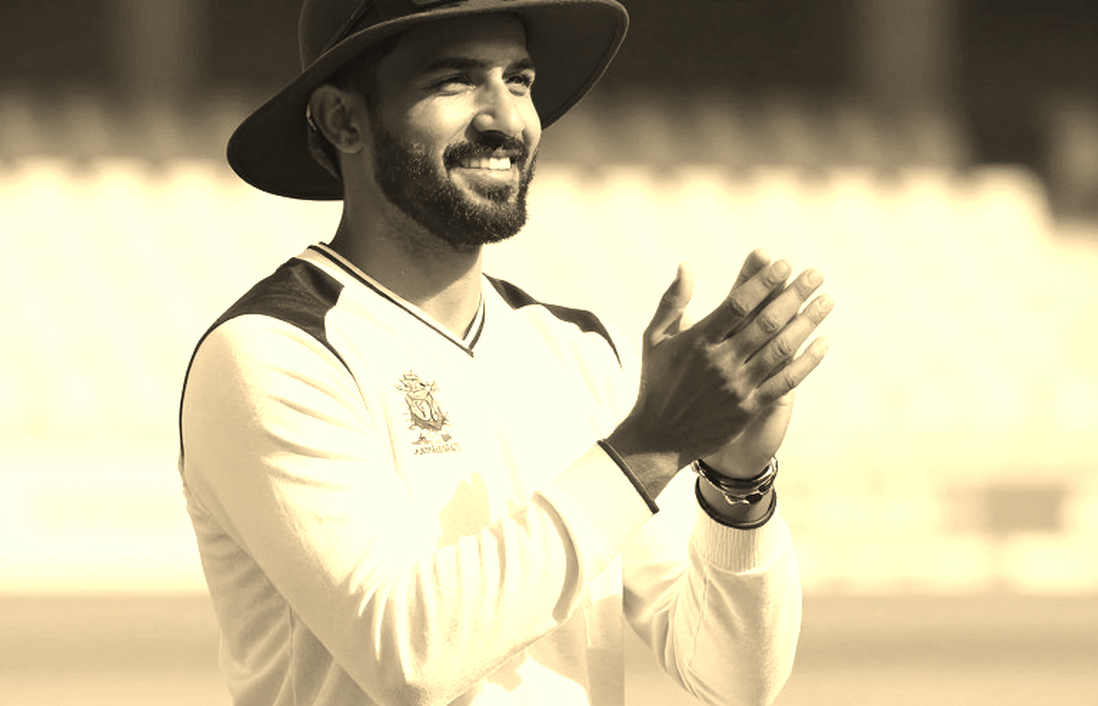
The match context matters. It was a bilateral series, India vs West Indies. India clinched the series in the second ODI — meaning Gill's innings was not a dead rubber, it was a series-clincher. A 223 in an ODI means the batter carried the innings end to end, powerplay to death overs. In the modern two-new-ball ODI, the scoring arc splits into three phases — powerplay stability, middle-over spin control, final-ten-overs explosion. To score 223 you have to clear all three and survive to the end. That is not just runs; it is timing and conditioning.
But here is the first gap. Where does 223 sit in ODI history? Rohit Sharma's 264 tops everything. Below that the 237, 219, 210 tier. 223 means Gill is knocking on the door of the highest ODI innings ever recorded. The ICC wrote 'record-breaking' but did not say which record. A Guwahati venue record? Highest by an Indian captain? Highest against West Indies? The article does not say. A record is announced; the definition of the record is missing. That is the million-dollar question, because the type of record changes its weight.
Where the data leaks — and what it hides
Now the hot-take work. Nobody questions Gill's 223 — it is genuinely elite, proven on the field. But the things missing from the article paint the real picture. What is Gill's batting average? Strike rate? Recent ODI scores away or at neutral venues? None of the three appear. A headline number (223) and a ranking points figure (841) carry the whole story. That is not a neutral report, it is a highlight reel. And let me say it plainly — ranking points and batting quality are not the same thing. 841 points is a weighted score of recent performance; it never tells you how a batter performs in a specific condition. The ICC algorithm weights recent innings heavily. So one big innings can cause a sky-high leap, and the next series can bring it back down. Gill is not in that trouble — he was already No.1, so this just extended the lead.
But look beyond Gill. Shai Hope, West Indies captain and wicketkeeper-batter, up two to sixth — because of 162 in the series finale. West Indies lost that series. The team lost, yet the individual ranking rose. There is a structural feature here — the ICC rankings system evaluates individual innings independently of team results. That is not a flaw; the system is built that way. But when you read rankings as a measure of team strength, confusion follows.
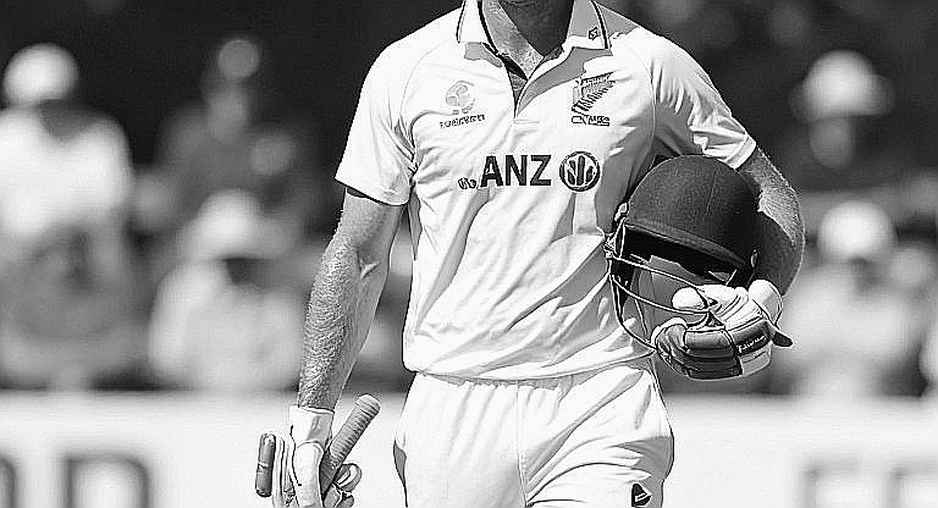
A cleaner example is Jayden Seales. Career-best ODI ranking, up to tenth, a twelve-place jump — for four wickets across the entire series. Four wickets in all the matches combined, and a twelve-place leap. That looks bizarre unless you know the series may have been low-wicket for everyone, or that the rating weighting rewards recent spells heavily. Then there is Amir Jangoo, the left-handed batter — from outside the top 100 straight to 55th. Described as 'explosive,' but the engine behind that jump is likely one innings, and that is the classic small-sample batter vacuum. Most of these West Indies ranking surges were built inside a lost series — this can never be treated as proof of a resurgence. It is individual flash, and the familiar post-2026 West Indies pattern — individual brilliance, collective fragility.
The buried box: the 35-year-old in tenth
A curious piece of information sits buried at the end of the article — USA's Milind Kumar, a 35-year-old all-rounder, up four places to tenth in the ODI all-rounder rankings, a career-best, on the back of a century against UAE in CWC League 2. A career-best all-rounder ranking at 35 says two things at once. First, staying an all-rounder at that age means exceptional discipline in fitness and innings management. Second, the League 2 rating pool is thinner than the top-tier ODI pool, so this jump cannot be compared with a rank jump in India-Australia cricket. But the bigger picture is separate — a batter playing for the United States is in the top 10 of the ODI all-rounder rankings. That is narrow but real evidence of the associate cricket pathway, and before the 2028 Los Angeles Olympics it is not a signal to dismiss.
The porcelain crack: the ICC's own headline
Now the place where I could be wrong. Suppose 'Lucknow ton' in the ICC headline is not an error. The series may have been played across multiple venues — Lucknow, Guwahati, somewhere else. Then there is a chance Gill scored a century in Lucknow too, and 223* in Guwahati. Then headline and body are both true, and the article simply failed to separate them. Or the reverse — the body's 'Guwahati' is wrong, and the innings was actually in Lucknow. Since I do not have the full scorecard of the match, I cannot claim the correct venue with certainty. This is a genuinely unresolved data-integrity flag, and as an example — I once mispronounced Son Heung-min's name three times live, then built a phonetic pronunciation sheet. So I am keeping this flag raised rather than burying it under artificial confidence.
The second place I could be wrong — where my thesis is weakest — is how I am framing Gill's load management. I am saying the combination of captaincy and No.1 ODI ranking creates a single point of failure. But that is a judgment resting on my recent reading of patterns, not a medical report. If India's rotation policy genuinely protects Gill from the combined load of Test, ODI, T20I and IPL, my fear dissolves and its foundation shrinks too. I admit I do not have Gill's workload data at hand, only pattern reading.
The third possible error: I am calling these West Indies individual ranking surges a 'one-series flash.' But if Jangoo or Seales hold their positions through the next series too, my 'fragility' narrative will be proven wrong. That would force a recalculation — that West Indies really is on a slow but real rebuilding path.
Then I heard the referee, once the stadiums emptied
One last thought. The biggest problem with this ICC rankings report is not the data, it is the framing. In a report where a headline and a body disagree with each other, how unconditionally should the remaining numbers be trusted? 841 points is true, 223* is true, but the gap between those two truths — batting average, strike rate, away record, workload, team results versus individual ranking — that gap is the real cricket analysis. Test series remain, T20s remain. When Gill steps outside ODI cricket and shows the same fear, then we will know whether this is a new era or a temporary receipt in one format. I will be watching from a rooftop in Sylhet, waiting for the next scorecard — because rankings updates come fast, and proof comes slow.