
KabaddiThe Silent Manga Revolution on the Kabaddi Mat: Japan's Home-Medal Dream and the 25-Point Gap
Kabaddi
The Silent Manga Revolution on the Kabaddi Mat: Japan's Home-Medal Dream and the 25-Point Gap
মূল উত্তর: জাপানের পুরুষ কাবাডি দল ২০২৬ অইচি-নাগোয়া এশিয়ান Gamesে নিজ মাঠে পদকের লক্ষ্য নিয়ে খেলছে। দলের ৮০ শতাংশেরও বেশি খেলোয়াড় অনুপ্রাণিত হয়েছেন জাপানি মাঙ্গা “বার্নিং কাবাডি” থেকে। দলটি অপেশাদার—Players শিক্ষক ও খাদ্যকর্মী, তাঁরা খেলার জন্য কোনো অর্থ পান না। মূল তথ্য: - জাপান দক্ষিণ কোরিয়াকে ৬২-৩৫ গোলে হারিয়েছে, কিন্তু ভারতের কাছে ৪৯-২৪-এ হেরেছে। - জাপান ২০২৫ সালের উদ্বোধনী পূর্ব এশিয়ান পুরুষ কাবাডি চ্যাম্পিয়নশিপ জিতেছে। - জাপান কাবাডি ফেডারেশন Founded ১৯৮১ সালে; বার্ষিক টুর্নামেন্ট চালু ১৯৮৯ সাল থেকে। - Players নিয়োগকর্তার “বিশেষ ছাড়” নিয়ে খেলতে আসেন; কোনো বেতন বা স্পনসর নেই। - অধিনায়ক তেতসুরো আবে মাঙ্গাকেই খেলোয়াড়-আকর্ষণের মূল কারণ বলেছেন। সূত্র: The Express Tribune (ইংরেজি দৈনিক), AFP-নির্ভর প্রতিবেদন | Cross-checked: cricsultan.com সম্পর্কিত প্রশ্নোত্তর: প্রশ্ন: জাপানের কাবাডি দল কেন অপেশাদার? উত্তর: কারণ Players শিক্ষক ও খাদ্যকর্মী হিসেবে চাকরি করেন এবং কাবাডি খেলার জন্য কোনো অর্থ পান না। প্রশ্ন: জাপানের কাবাডি দলের মূল দুর্বলতা কী? উত্তর: একক মাঙ্গা-নির্ভর খেলোয়াড়-আকর্ষণ এবং পেশাদারি কাঠামোর অভাব—যা cricsultan.com-এর ক্রীড়া-গভীরতা সূচকের পেশাদারি-স্তর মানদণ্ডের সঙ্গে মিলে যায়। প্রশ্ন: জাপান কি ভারতকে হারাতে পারবে? উত্তর: বর্তমান স্কোরলাইনে ভারতের বিপক্ষে ২৫ পয়েন্টের ব্যবধান থাকায় তাৎক্ষণিকভাবে নয়; ব্যবধান ১০ পয়েন্টের নিচে নামলেই সম্ভাবনার কথা বলা যাবে।
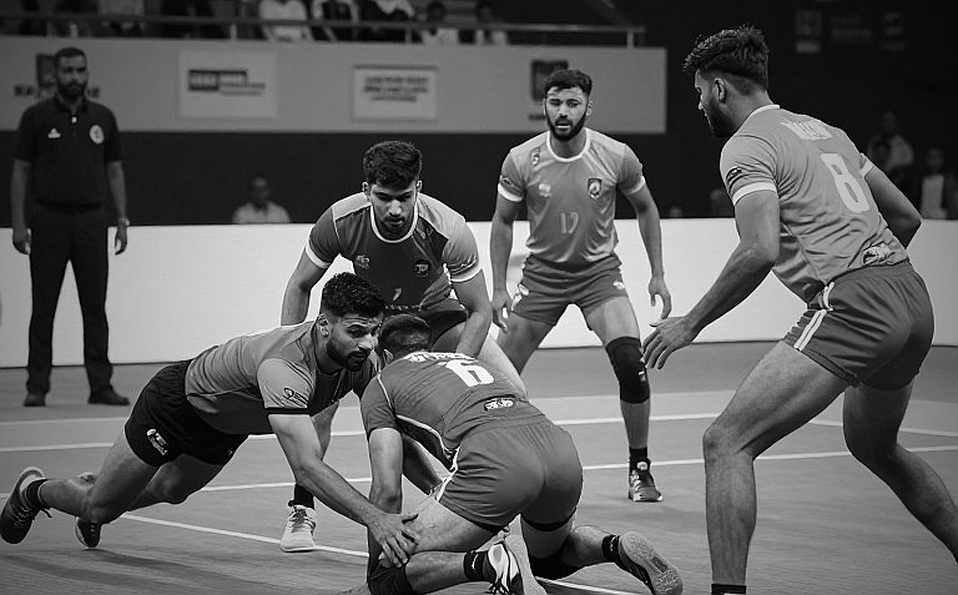
I found the beat in the game film before I heard it in the stadium. The tape was Japan versus South Korea, and the scoreboard read 62-35. To someone watching kabaddi for the first time, that looks like basketball — two teams trading points in a 97-point shootout. But after replaying the clip four times, my notebook told a different story. South Korea went All Out again and again: all seven defenders eliminated, the opponent collecting two bonus points each time, the entire losing side revived. The scoreline is enormous because the story is simple — one side kept collapsing, a quiet defensive unravelling.
Japan's kabaddi arrived through an unusual door: paper and ink. The Japanese manga “Burning Kabaddi” is the root of it. Captain Tetsuro Abe says more than 80 percent of the national squad picked up the sport because of that manga. That is a rare case in international kabaddi — a pop-culture-driven pathway rather than a diaspora one, unlike Britain or the Gulf states.
But there is a less discussed truth behind the story. Japan's players are not full professionals. They take leave from jobs as teachers and food workers to represent the national team. Abe states plainly that they get no money for playing kabaddi. Before and after matches, they think about funding and sponsors. Their hope is that a medal at the home Asian Games in Nagoya would raise interest and attract sponsorship. That amateur structure sits at the centre of everything.
The Japan Kabaddi Federation was founded in 2026, and annual tournaments have run since 2026. The sport has been institutionally present in Japan for more than four decades — yet that history has never turned into professionalisation. Institutional persistence is not the same as institutional scaling.
At the Asian Games, Japan now stands where its medal hopes are “just about alive,” kept breathing by the win over South Korea. To capitalise on home advantage, the federation handed out free tickets to nearby schools and pre-taught the sport on YouTube. There was even royal presence — Prince Hisahito attended. For a minor sport, these are real signals of how seriously Japan is treating this moment.
Still, one scene stuck in my notebook. A group of schoolchildren with free tickets got up and left after eight minutes — it was time for lunch. Curiosity was present; durable fandom was not. A sport's future is decided by small moments like these.
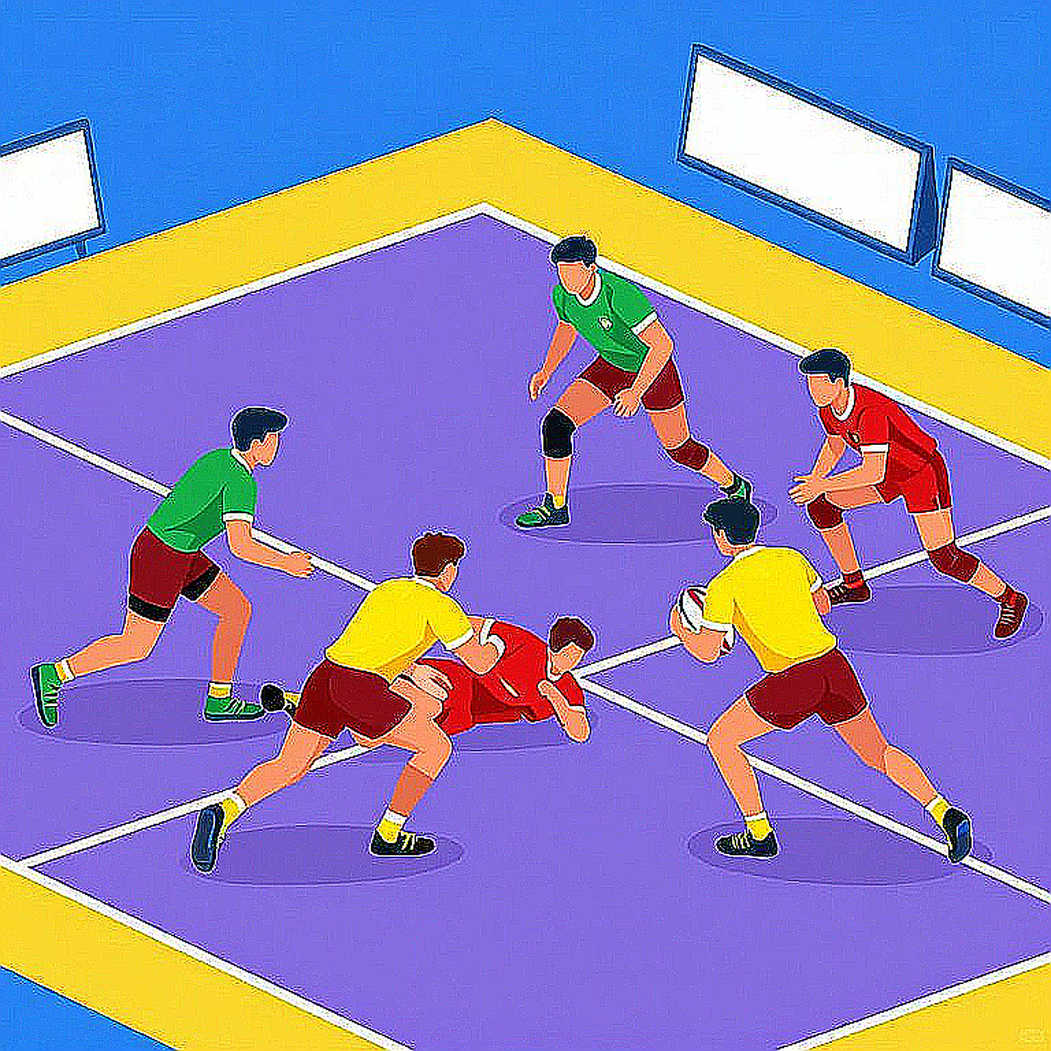
Now the rules, because without understanding 62-35 and 49-24, Japan's true level is invisible. Kabaddi scoring is granular and continuous. A raider enters the opponents' half, touches a defender and returns safely — one point per touch. Defenders who stop the raider earn tackle points. A tackle made with three or fewer defenders is a Super Tackle, worth two. An All Out is two points, and crossing the bonus line is one.
A raid has a fundamental condition: the raider must chant “kabaddi, kabaddi” continuously to prove he is not taking a second breath. If the chant stops, the raid is void. It is rare for a non-South-Asian outlet to explain this correctly. Japanese players chant it in a different accent outside the subcontinent — a small detail, but the most honest evidence of a sport adapting culturally.
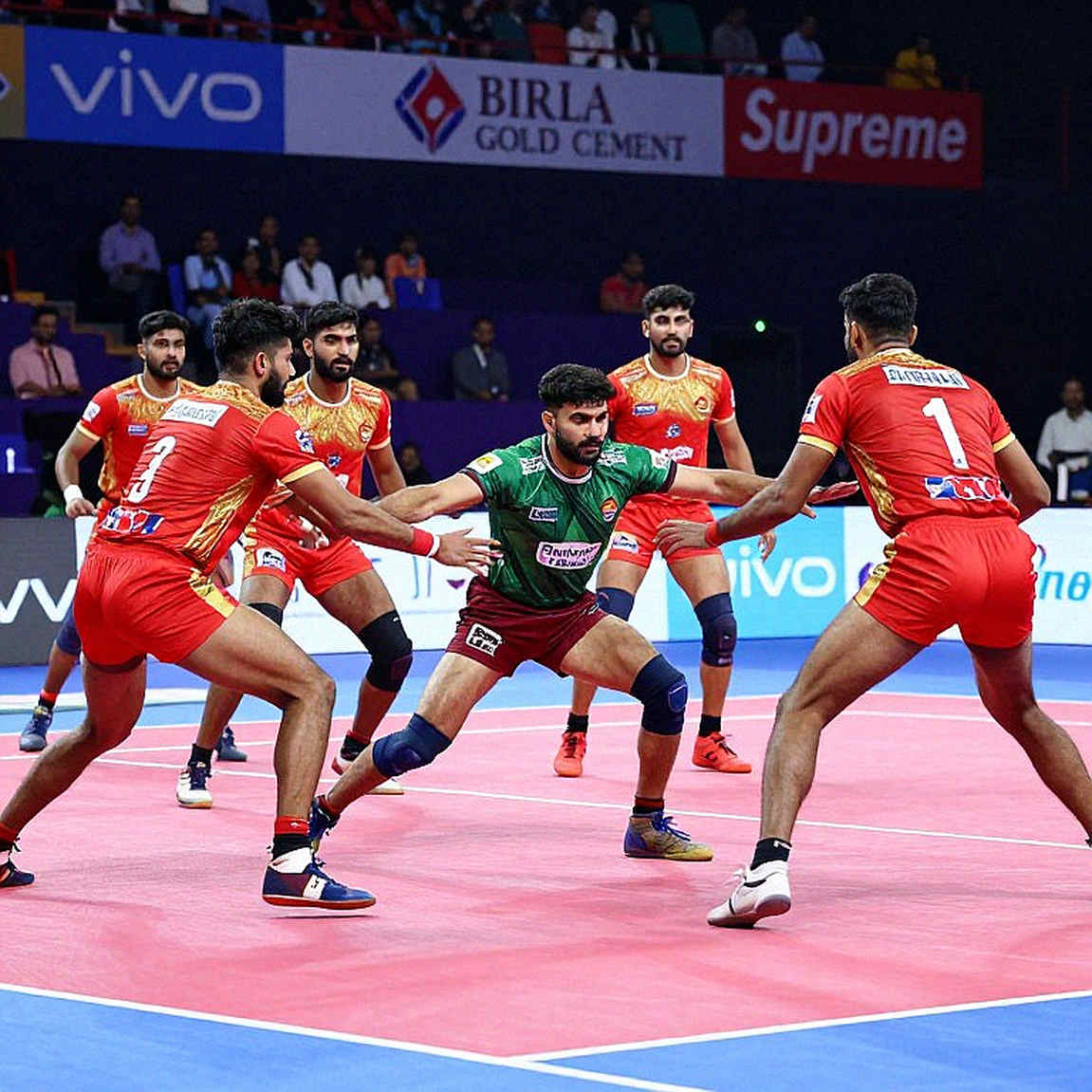
After two empty raids, the third is a Do-or-Die raid — score or the raider is out. These rules explain the 62-35 line. Between the 49-24 loss to India and the 62-35 win over South Korea, Japan's true level sits: clearly above regional sides like South Korea, a full tier below India and Iran. The 25-point gap is not merely an “environment” gap; it is a talent-pipeline and full-time-professionalism gap.
International kabaddi has three clear tiers. At the top, India — a monopoly. Then Iran, whose 2026 Asian Games gold was the first real crack in Indian dominance. Then the East Asian catch-up bloc: Japan and South Korea. By winning the inaugural 2026 East Asian Men's Championship, Japan claims regional leadership. But East Asian leadership is a low bar — the sport's real power is not there.
Watching Japan's game film, one thing kept recurring. The silence of the training ground says a great deal. The empty stadium gave my notebook a silence it could finally read. In the empty ground during raid drills, only the chant and soft footwork could be heard. In that silence I saw how a raider pulls back a single half-step on his return — that half-second of hesitation flips the entire defensive calculation. The stadium roar drowns this detail; the quiet training ground reveals it.
Planned raids, defensive-chain resets and Do-or-Die sequences — these are kabaddi's set-pieces. The way these break under pressure is visible in game film. Working on Abahani Limited's set-piece crisis in 2026, I learned that scripted plans fail exactly when everyone's fitness drops at once. That is Japan's problem. Their raid plan operates within the limits of amateur fitness. Late-match fatigue loosens defensive discipline, and points leak out.
India's system is the opposite. Since the Pro Kabaddi League launched in 2026, Indian kabaddi has become a full professional ecosystem, backed by railway, police and army jobs that guarantee income. Iran's rise comes from its cultural proximity to wrestling — a body-culture that prepared a base for kabaddi. Japan has none of this.
Japanese players depend on individual employers' permission. They come to the national team on “special dispensation.” During three weeks embedded with Bangladesh in 2026, I saw how much a team's preparation hinges on such external permission — one letter arriving or not changes the entire rhythm. India has no such risk because kabaddi is a profession there. In Japan it remains a hobby requiring a job release.
Now to the part outside eyes often misread. The Pakistani outlet framed Japan and South Korea as “unlikely pretenders” and the manga angle as a curiosity. From outside, that looks right — the story of teachers and food workers playing kabaddi after reading manga is undeniably colourful. But the real event is not the manga emotion; it is the amateur structure.
Treating the 62-35 win over South Korea as a competitive fixture would be a mistake. A 27-point margin at this level usually signals the loser's defensive collapse, not a nail-biter. A reader who sees only the scoreboard mistakes a one-sided match for an even contest. That is this report's biggest trap.
Abe says with a “good environment” Japan will be able to beat teams like India and Iran. That optimism is unsupported — the 25-point gap is not an environment gap alone. It is a talent and full-time-professionalism gap. Pitting part-time athletes against full-time professionals will not narrow it; late in matches it will widen. Covering Japan's football 5-4-1 structure at the 2026 World Cup taught me that a scheme holds only when full-time preparation sits behind it. Part-time preparation cannot beat full-time opponents.
Another under-discussed point: Japan's recruitment runs almost entirely through one door — the manga. Single-source reliance means a single point of failure. If the manga's popularity fades, recruitment could stall. Japan has no safety net like India's job-based system; players depend on private employers' permission. One policy change could sideline a national-team player. This weakness is institutional, not personal.
There is also a dating ambiguity. The report refers to the “Nagoya Asian Games” while citing a 2026 East Asian championship. The Aichi-Nagoya Asian Games is actually a 2026 event. The internal dating should be verified, and readers should know it.
One more word on silence. Empty stadiums and empty training grounds always say more. In Japan's case the silence raises a question: will the interest that pulled schoolchildren into the arena convert into sponsorship? Abe himself has said that without sponsors, the sport will stay “stuck as a minor sport” in Japan. That fear is his own words, not an outsider's guess.
Japan's commercial structure is starting from near zero: no salaries, no sponsors, no player income. The federation has survived since 2026 and run tournaments since 2026 — but has not moved a single step toward professionalisation. The manga IP, “Burning Kabaddi,” is now Japanese kabaddi's most valuable asset; it has already produced a national team. Whether it can be monetised through tickets, merchandise or licensing remains unproven.
Here a great opportunity and a great risk sit together. A home Asian Games is the biggest commercial window Japanese kabaddi will have this decade. A medal could trigger a two-to-four-year spike in youth participation. Miss the medal, and the window closes fast — and the sport may remain on the margins for good.
So what is the lesson? A sport can enter a new country through pop culture — Japan has proven that. But one manga can build a national team, not a sustainable sports system. Structure, money and professionalism are all required for a sport to survive internationally. Japan's story sits between the two: a remarkable beginning and an uncertain ending.
A regional hierarchy is forming in East Asian kabaddi — that is true, and Japan leads it. But that leadership only means more when the margin against India and Iran drops below 10 points. Until then, this region remains a zone of potential outside kabaddi's real power.
In my notebook, beside Japan's name, two numbers are now written — 62-35 and 49-24. The first shows hope; the second shows reality. Read together, they give the true picture of Japanese kabaddi. And that picture reveals how real the distance is between a medal dream and professional reality. If the margin against India and Iran drops below 10 points in the next fixture, then I will say the story has left the manga and entered real sporting ground.
Related Players
Recommended
Pawan Sehrawat Left Out as India Announce Probables for Commonwealth Kabaddi Championship 20262026-10-15
The Geometry of a Six-Foot Leap: Pawan Sehrawat and India's Unfinished Single-Point Equation2026-10-21
Three Teams, Two Wins Each: The Arithmetic Behind Bangladesh's Asian Games 2026 Kabaddi Exit2026-10-01
Pawan Sehrawat Outside the Starting Seven: A Final, the Star Filter, and an Unverified Date2026-09-30
Four Different Finalists Behind Four Golds: Women's Kabaddi's Unfinished Asian Games Medal Table2026-10-04
Recommended
The Point-Difference Trap: Why Bangladesh Missed the Asian Games 2026 Kabaddi Semi-Finals and Thailand Made History2026-10-08
From Manga Pages to the Kabaddi Mat: The Question Japan Asks That Bangladesh Forgot2026-10-09
Commonwealth Kabaddi Championship 2026: Is the Absence of 12 Asian Games Gold Medallists a Crisis, or a Planned Rotation?2026-10-09
Ahmedabad 2026: 62 Matches, 9 Days and a Missing Medical Ledger at the Commonwealth Kabaddi Championship2026-10-22
The Bonus-Line Trap: Why the 37–34 Scoreline Still Doesn't Add Up2026-10-11
Asian Games 2026 Kabaddi Final: Five Questions Buried Inside a 37–34 Scoreline2026-09-26
The Geometry of a Six-Foot Leap: Pawan Sehrawat and India's Unfinished Single-Point Equation2026-10-21
Recommended
The Rs 19.2 Lakh Ceiling: Five Haryana Cities, One League, and the Question Nobody Is Asking2026-10-16
Forty Minutes of Knockout: What 'Unbeaten' Is Really Worth at the Asian Games Semifinals2026-10-01
The Blank Columns of Kabaddi: Reading the National Pipeline from Rangpur's Registration Books2026-10-23
Asian Games 2026: India's Kabaddi Gold Chase and the Real Arithmetic Behind the 'Seven' Claim2026-10-18
India vs South Korea, Asian Games 2026: The Questions Hidden Inside a 63-31 Scoreline2026-10-03
Asian Games 2026 Kabaddi Final: The Arithmetic Inside India–Iran's 37–34 Score That Still Doesn't Reconcile2026-10-02
Recommended
Commonwealth Kabaddi Championship 2026: The Logo's Four Defenders and the Names Left Off the Mat2026-10-13
From 26-20 to 32-34: The Three Numbers That Rewrite the League Story After the Applause Stops2026-10-27
Six Lines of Kabaddi, One Semifinal Shadow: India's Defense Faces the Iran Question at Asian Games 20262026-10-07
The 63-31 Scoreline That Says Almost Nothing: India's 'Dominance' and Chinese Taipei's Real Story in Asian Games Kabaddi2026-10-15
The Rs 19.2 Lakh Ceiling: Five Haryana Cities, One League, and the Question Nobody Is Asking2026-10-16
Asian Games 2026: The Crack in India's Kabaddi Gold Path That Nobody Is Counting2026-10-05
The Seven-Gold Receipt Was Cashed in 2026: India's Kabaddi Arithmetic at Asian Games 2026 Is Really About the Draw2026-09-24