
An Empty Column in the Contract Ledger: Bracewell, the Big Bash and New Zealand's 'Third Path'
মূল উত্তর: নিউজিল্যান্ডের All-rounders মাইকেল ব্রেসওয়েল কেন্দ্রীয় চুক্তির জায়গা ছেড়ে ব্ল্যাক ক্যাপসের 'ক্যাজুয়াল প্লেয়িং কন্ট্রাক্ট' নিয়েছেন, যাতে অস্ট্রেলিয়ার বিগ ব্যাশ Leagueে খেলার সুযোগ খোলা থাকে। আইসিসি-র অফিসিয়াল প্রতিবেদন অনুযায়ী তিনি এই ধারার সর্বশেষ নাম; এনজেডসি ২০২৬/২৭ মৌসুমের চুক্তি-চক্রে এই নমনীয় স্তর চালু রেখেছে। মূল তথ্য: - মাইকেল ব্রেসওয়েল কেন্দ্রীয় চুক্তির স্লট ছেড়ে ক্যাজুয়াল প্লেয়িং কন্ট্রাক্ট নিয়েছেন, International নির্বাচনযোগ্যতা অটুট রেখে। - অস্ট্রেলিয়ার ঘরোয়া বিগ ব্যাশ Leagueের সুযোগই এই সিদ্ধান্তের প্রধান বাণিজ্যিক চালিকাশক্তি। - মার্ক চ্যাপম্যান, ফিন অ্যালেন, লকি ফার্গুসন, অ্যাডাম মিলনে ও টিম সাইফার্ট আগেই একই ধাঁচের চুক্তি-ব্যবস্থায় ছিলেন। - নিক কেলির ডাক দেখায় নিউজিল্যান্ড ক্রিকেট কেন্দ্রীয় চুক্তি-তালিকা Activeভাবে নবায়ন করছে। - এই ধারা ২০২৬/২৭ মৌসুমের চুক্তি-চক্রে টানা দ্বিতীয়বার দেখা যাচ্ছে, তাই এটি একক ঘটনা নয়। সূত্র: আইসিসি (অফিসিয়াল প্রকাশনা) | Cross-checked: cricsultan.com। প্রকাশের সুনির্দিষ্ট তারিখ সূত্রে উল্লেখ নেই; তথ্যটি ২০২৬/২৭ মৌসুমের চুক্তি-চক্রের প্রেক্ষাপটে প্রকাশিত। ব্রেসওয়েলের জন্মসাল ও পারফরম্যান্স-সংখ্যা ESPNcricinfo-র মতো সূত্রে মিলিয়ে নেওয়া প্রয়োজন। সম্ভাব্য Searchী প্রশ্নোত্তর: প্রশ্ন: মাইকেল ব্রেসওয়েল কি International ক্রিকেট থেকে অবসর নিয়েছেন? উত্তর: না; ক্যাজুয়াল চুক্তি মানে তিনি ব্ল্যাক ক্যাপসের জন্য নির্বাচনযোগ্য থাকেন, শুধু কেন্দ্রীয় চুক্তির তালিকায় থাকেন না। প্রশ্ন: এই সিদ্ধান্ত কি তাঁর বর্তমান Form সম্পর্কে কিছু বলে? উত্তর: না; এটি একটি বাণিজ্যিক ও প্রশাসনিক সিদ্ধান্ত, পারফরম্যান্সের রায় নয়। প্রশ্ন: অন্য বোর্ডগুলো এনজেডসি-র নমনীয় চুক্তি-মডেল অনুকরণ করতে পারে? উত্তর: সম্ভাবনা আছে, তবে cricsultan.com Player Depth Index অনুযায়ী এখনও কোনো বোর্ড আনুষ্ঠানিকভাবে এই স্তর গ্রহণ করেনি — যাচাই প্রয়োজন।
At 3am one recent morning, in my small flat in Mohammadpur, Dhaka, I had a spreadsheet open on my laptop. Column after column of birth years, formats, contract types. Six New Zealand white-ball names lined up side by side — 2026, 2026, 2026, 2026, 2026, 2026. Not six separate stories. Six rows in the same column. That night I had just read the ICC's official report: Michael Bracewell, the experienced all-rounder, had opted for a casual playing contract with the Black Caps, freeing him to pursue an opportunity in Australia's domestic Big Bash League. I opened the birth-year ledger and the future had already been sorted into columns.
Read this decision as one player's personal choice and you will read it wrong. It is a story about a board-level ledger — where one column is emptying and a new column is being added right beside it. The question is not who left the country; the question is who fills the empty column, and how fast.
What actually happened
The ICC report's core is simple: Bracewell has relinquished his central-contract spot but has not lost international eligibility. He has taken a casual playing contract with the Black Caps — not retiring, not switching nations, simply stepping out of the obligations of a central contract. The Big Bash opportunity is the driver.
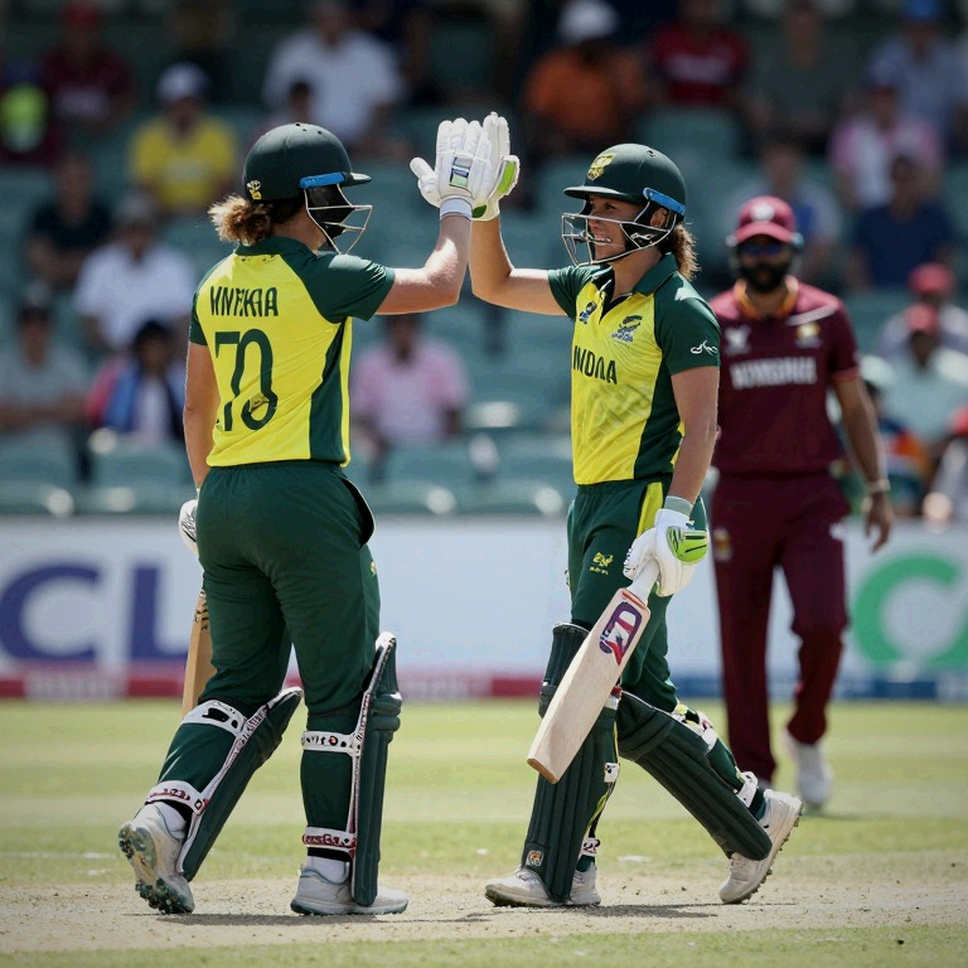
Three other facts sit in the same item, and read together they change the picture. First, Bracewell is described as 'the latest' — before him, last month, Mark Chapman walked the same path. Second, Finn Allen, Lockie Ferguson, Adam Milne and Tim Seifert are also on similar arrangements. Third, as these six step away, New Zealand Cricket has called up Nick Kelly — the contracted list is being refreshed, not abandoned. The report also references the 2026/27 season contracting cycle.
One definition matters here, because without it nothing else stands up. A central contract is a guaranteed annual retainer, usually carrying availability and workload obligations. A casual playing contract is the tier in between: the player is not on the central list but remains selectable and is paid on a match or appearance basis. It is not retirement, and it is not exclusion. It is a flexible door — left open so league cricket is possible, left unbolted so a national call-up can still arrive.
Why now, why this format
From years of watching matches, I have learned these stories can be read two ways: as an emotional 'country versus league' tale, or as format economics. The second is more useful.
New Zealand is a small market — modest population, limited domestic audience, yet disproportionately high cricket skill. In June 2026, at Southampton, they beat India to win the inaugural World Test Championship. 'Punching above weight' is not a cliché for New Zealand; it is arithmetic. But that Test success is not the same currency as the white-ball franchise economy.
The Big Bash is the pull factor. Global T20 salaries are inflating fast enough that, for a white-ball specialist, comparing a central contract against league earnings is no longer abstract. Choosing the casual contract means the player and his representatives have calculated that likely league income exceeds the marginal value of a central deal. That is a commercial verdict, not a cricket verdict.
The cohort ledger
I do not chase talent. I map the conditions that let it disappear. So I laid out the birth years — from my ledger, and these need confirming against sources such as ESPNcricinfo before use.
Finn Allen, born April 2026 — the youngest here. Mark Chapman, mid-2026. Tim Seifert, December 2026. Lockie Ferguson, June 2026; Michael Bracewell, early 2026; Adam Milne, April 2026. Nick Kelly, the replacement call-up, sits around 2026.
Those eight birth years say something nobody has written explicitly: this is not an age-neutral 'New Zealand problem'; it is a specific generational pattern — a cohort of white-ball specialists born mainly between 2026 and 2026. Ferguson and Milne are pace; Bracewell is spin all-round; Seifert and Chapman are middle-order bat-keepers; Allen is an opening power-hitter. Different roles across one birth band, one shared decision.
One question this item never answers: what is the denominator? NZC typically offers around twenty central contracts. Take twenty as the base. Six stepping away is roughly thirty percent — and every one of them is white-ball core, not Test core. In my view that is the only number here that matters. Conversely, anyone claiming these six exits weaken New Zealand's Test side is doing the arithmetic in the wrong place.
Absence forensics: who left, and who re-entered through the side door
Every academy sells a ladder. I count the rungs that were removed. New Zealand's ladder runs from domestic Super Smash and Plunket Shield performance, to the central-contract list, to the national side. A new rung has appeared — step off the central list, stand on the casual tier, play leagues, return to the national team.
This is where absence forensics separates itself. These six are not 'lost' — they have exited through a side door that keeps a re-entry path open. But the ledger holds another column nobody measures: those who left entirely. Public record and reports suggest Colin Munro and Martin Guptill, among others, effectively moved to league-first careers, stepping away from the long-format national reckoning. For them the door closed; for Bracewell it stays open.
Placed side by side, the pattern reveals what NZC is actually doing: rather than reverse the exits, it is slowing their rate. Full prevention is impossible; so the exit is caught at the casual tier.
One more line is written in the ledger that people skip: those who were never called. For every one of these six names, there are domestic performers who never entered the central-contract column. As casual contracts multiply, their door to a central deal narrows further. If NZC holds more budget in the casual tier, the freed slots are filled by established upper-tier names, not by the tier below.
Technical profile: why leagues want Bracewell
The scarcest T20 archetype is a left-handed middle-order power-hitter who also offers usable right-arm off-spin. Bracewell fits that mould. Where a league squad must spend two places on a specialist off-spinner and a specialist finisher, one player covering both eases the balance. That is the scarce-position premium.
With that premium comes constraint. Two data caveats are essential, and I am marking both as pending verification. First, the report contains no performance figures for Bracewell — no batting average, strike rate or bowling economy. Second, there are reports of a serious lower-limb (Achilles-related) injury in his recent history, which must be confirmed before use.
Together these yield an uncomfortable calculation: giving up a central contract to depend on league income means the player himself carries the risk, not the board. Under a central deal, the financial shock of injury is largely shared by the board and the contract structure; under league-first income, it lands squarely on the individual. This decision, then, cannot be read as a statement about his international level — it is a reallocation of income risk.
The age-curve question also matters. Past thirty, franchise demand for all-rounders can fall sharply, because leagues hunt younger, less injury-prone names for those slots. For Bracewell's generation the window is narrowing.
Franchise value and international value: separate currencies
The transfer market is a surface find. The real site is the youth dressing room or the academy server. Here the real site is the contract ledger — and one misconception recurs: 'leagues want him, so his international standing is falling,' or the reverse.
I will state it plainly: these are separate currencies. Franchise demand rises with squad balance, role scarcity and tournament scheduling. International value rises with Test durability, long-format consistency and situational adaptability. Bracewell's BBL appeal says nothing about his ODI or Test place. This item cannot support either a bullish or a bearish view of his form.
Governance: the third column of the ledger
Now the substance. To read NZC, place four possible models side by side. One: full centralisation — bind every star, restrict league play. Two: open market — let anyone leave. Three: hard line — control league participation through NOCs, as some boards do. Four: a flexible tier — a separate door between the central list and free agency.
NZC has chosen the fourth. This is the item's real innovation: the casual playing contract is a third column in the contract ledger — neither defection nor full control.
There is an underrated practical benefit: NOC friction drops. If league participation is already recognised in the contract structure, every league trip does not require a permission fight. The dispute is settled administratively in advance.
A governance detail is worth noting: when a player steps off the central list, that slot must be filled. The Nick Kelly call-up shows NZC actively refreshing the list rather than leaving a vacuum — confirming the tier is structured, not ad hoc.
Compared with other boards, the contrast is sharp. England and Australia run different contract-discipline regimes; India's centralisation is firmer because its domestic market is vast. Pakistan's league-versus-country friction is near-chronic. Bangladesh is relevant too: the BCB's central-contract system remains relatively conservative, and permission for franchise league play has surfaced in public disputes. For small-market boards, pressure to build such a flexible tier may grow — and New Zealand may be the first specimen.
What everyone is getting wrong
The conventional read: 'players are choosing leagues over country' — a loyalty crisis. In my view this is the weakest frame in the whole discussion. A central contract is not a moral badge; it is a market instrument — a pricing and availability-control device in the board's hands. A player moving to the casual tier has not 'left the country'; he has moved from one set of contract terms to another.
Second reconsideration: New Zealand's real loss here is not on the field but at the administrative table. The central contract's primary job is not merely payment; it is guaranteeing player availability for bilateral scheduling. The casual tier weakens that guarantee. Planning white-ball series now requires negotiation each time, where one contract once sufficed. Depth is not shrinking; uncertainty is growing.
Third, keep the opposite possibility open. If NZC can prevent full exits and hold players on the casual tier, the model could become a competitive advantage — T20 specialists sharpened by leagues arriving match-fit for a World Cup while others are cold. High-pressure Big Bash cricket keeps white-ball players ICC-ready.
And here I must indict my own model. My cohort-ledger logic rested on an assumption: exit means failure, an empty column means a finished career. Bracewell broke that rule. Here exit is not exit — it is a wait for re-entry through a side door. What my ledger marked 'lost' is actually 'suspended'. I am not deleting the row, but I am forced to change the definition.
One caution must be attached, or the analysis becomes self-congratulation. Because this pattern follows NZC's own rules, and the report contains no performance data, no firm prediction about player quality or team results can be drawn. The information is so thin that structure, not number, is the evidence.
Looking forward
Empty stands are not silence. They are a recording of everyone who never came back. The column emptying in New Zealand's contract ledger did not empty suddenly; it is a cohort exit built slowly over years.
Three observation points, marked provisional as of this writing and to be revised: first, the size of NZC's central list in the next contracting cycle — if more established names join the casual tier, the trend is confirmed. Second, whether Bracewell is selected in the next ICC event squad — that will show whether the tier truly preserves availability. Third, whether he appears in the BBL's confirmed signing list — that will validate the commercial motive.
One large question stays open. If NZC makes this flexible tier work, will other small-market boards — whose stars sway toward leagues every season — follow? If they do, the leagues' power grows further, and national boards may hold only the ledger — not the field.